
Mentors
Reflecting on the positive impact mentors have had on me throughout my career and why it’s important to remember them.

Lost and found
Over the last five decades there have been people I’ve encountered who unexpectedly came in to my life but then disappeared again without me really noticing. It was only when something jogged my memory, many years later, that I realised I missed them and regretted losing touch, wondering what became of them?
Many of these people I have eventually been able to find online and reconnect with, but there are still a handful who seem completely unknown to Google’s search engines or have zero social media presence, despite my searching every few years.
However, for one of them, my futile searches delightfully ended recently.
A modest book launch was all it took for their name to suddenly appear in my search results. I clicked on the link, which led me to a page of an art publisher’s website, promoting a new book called Indiscretions (& Nakedness), that included an embedded video of the author reading a passage from it.
The man I remembered 35 years ago was maybe forty, balding on top, but still had jet black hair on the back and sides that hung over his ears, almost reaching his shoulders. He wore jeans and either a bohemian jumper or a black leather jacket and a silk scarf. He spoke with a soft, very distinct voice and was an authentic old school artist of the sixties, similar in my mind, to the mannerisms of Tony Hart.
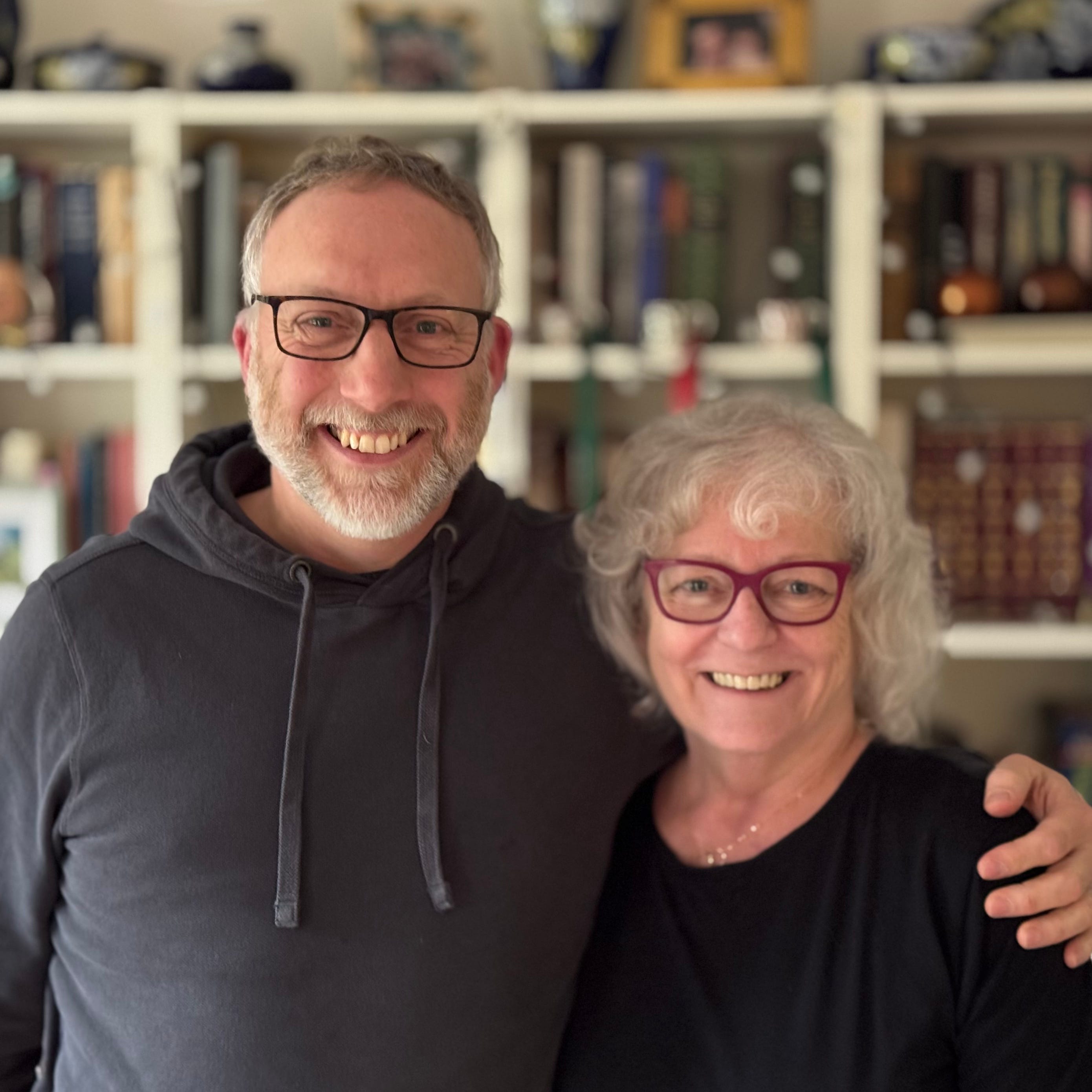
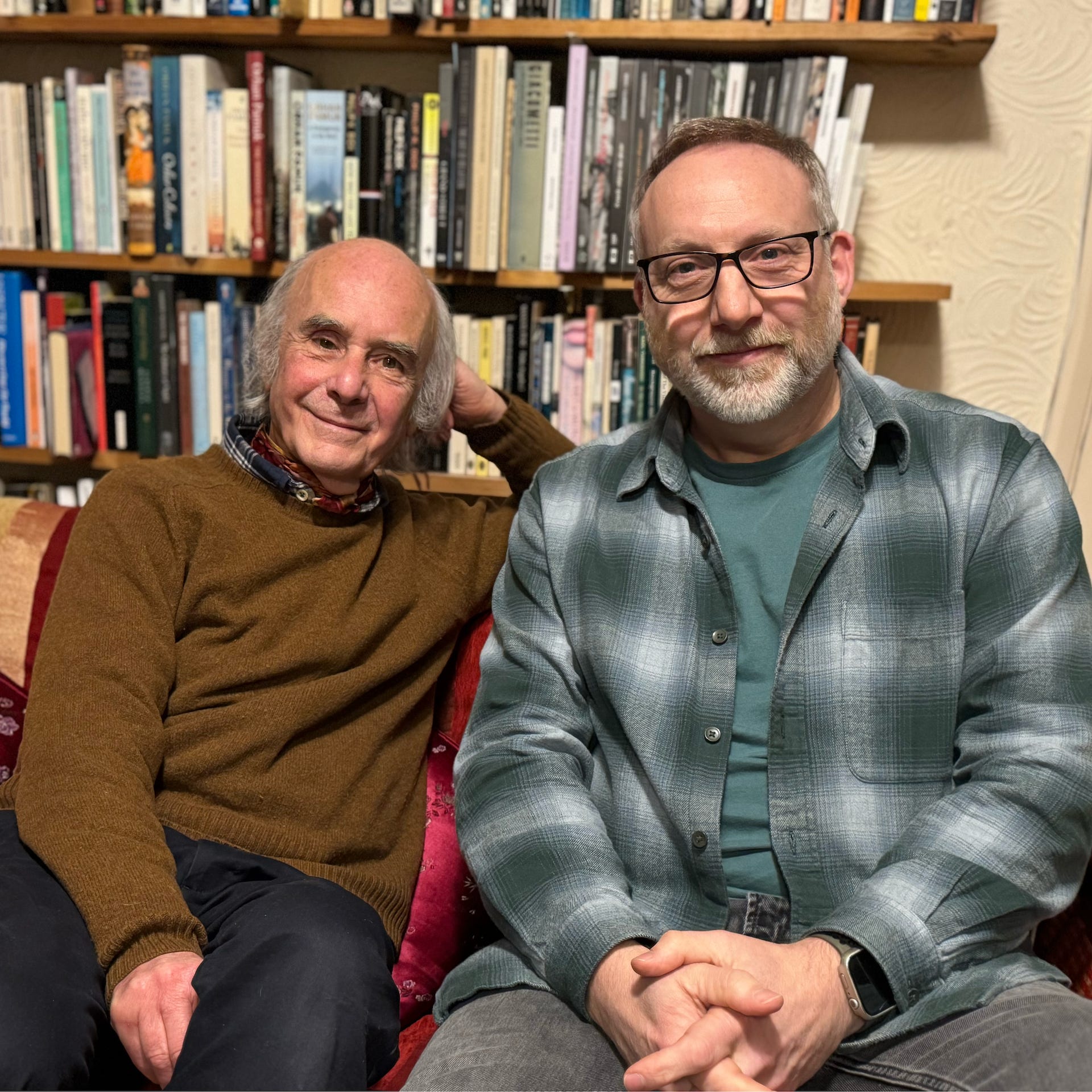
The man I could see in the video was also bald on top, but now with grey straggly hair on the back and sides, maybe even a little longer than before. He was sitting in a room full of books, magazines, vinyl and video tapes, which all made perfect sense, but I still wasn’t sure. It was only when I heard his unmistakable voice, that I knew instantly it was Paul Buck - my long-lost mentor.
Such an unexpected discovery brought with it a warm surge of delight, that inspired me to write this piece. When you take the time to contemplate all the mentors you have had the privilege to meet over the years, you realise that all your successes could not have unfolded without them.
The purpose of mentors
In Jonathan Hight’s new book The Anxious Generation, he talks about the importance of mentors, particularly during the mid phase of adolescence.
“A human child doesn't morph into a culturally functional adult solely through biological maturation. Children benefit from role models (for cultural learning), challenges (to stimulate anti-fragility), public recognition of each new status (to change their social identity), and mentors who are not their parents as they mature into competent, flourishing adults.”
I think this ‘turning point’ in maturation stretches far into adulthood too - apprentice to master to mentor can take several decades.
Carl Jung believed that a person's connection to the collective unconscious manifests itself as a set of universal archetypal characters, that are depicted in classical literature and mythology. One of which is the distinct character of the Wise Old Man, the Mentor, the Sage, the Senex, the Sophos - someone who has attained wisdom, and is associated with knowledge, reflection, cleverness, and intuition that is passed down through generations.
Jung had his own mentor for many years - Sigmund Freud, until he eventually outgrew him, going on to develop his own, more lasting and effective theories.
The delicate balance of mentoring someone is not creating them in your own image, but giving them the opportunity to create themselves.”
Steven Spielberg
Eventually we all naturally outgrow our mentors and once we have mastered our own particular craft, skill or talent, if we haven’t done so already, we realise it’s now our turn to mentor those who are coming up behind us. Inadvertently we become the new guiding lights of our craft.
So, without further ado, in chronological order, here are the wonderful mentors of my life, who without their guidance and support, I’d not have had nearly as many enriching and meaningful experiences:
Gillian Alderson
I was easily distracted in school. The thrill of making fellow pupils laugh was an addictive kind of attention that eased the rampant self-consciousness that all teenagers suffer, especially when such attention came from the opposite sex. In addition, my best friend Tom had an annoying ability to muck around in class, yet at the same time still take in everything we were being taught.
Fortunately, my attention and my performance in class improved significantly after he went on to grammar school (I was considered borderline - better to be top of the bottom than bottom of the top), but I still found reading and writing harder than it should have been.
Thankfully I had a very good teacher - Mrs Alderson (Miss Norman, before she married the physics teacher Mr Robert Alderson). Like all good teachers, she had complete control of the class. She was strict, but fair and could silence a badly behaved pupil with just one stare (not too dissimilar to Paddington Bear).
As a reward for good behaviour, she would always give you a half-time break in the lesson, to tell an amusing anecdote, or to discuss a current affair. As a result, I respected her far more than most other teachers.
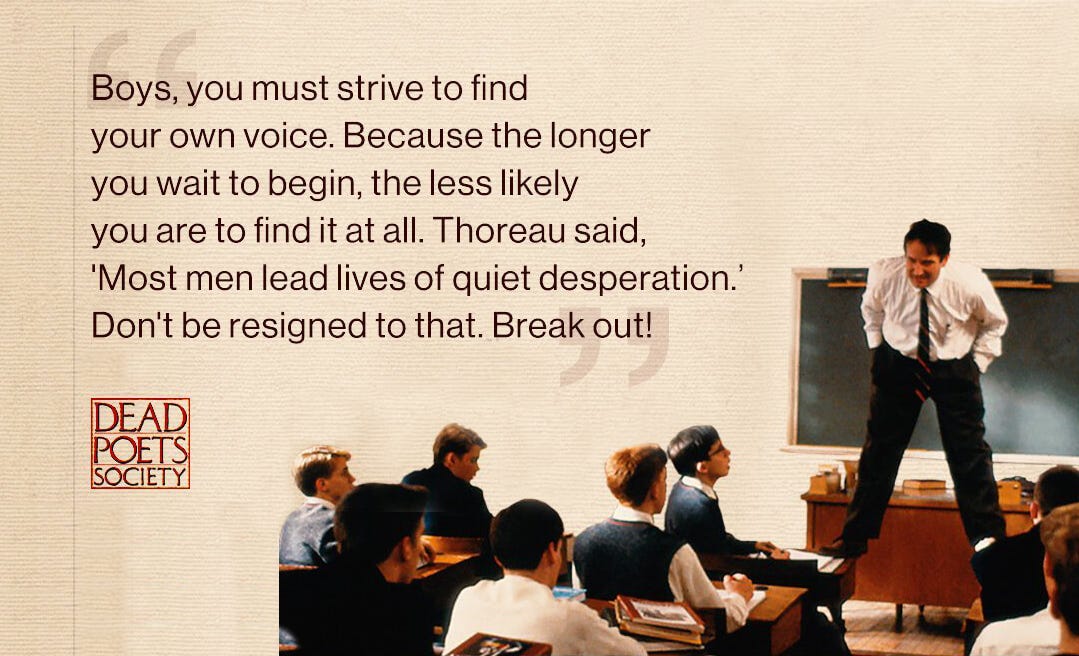
It’s not that I couldn’t read or didn’t enjoy reading. I still remember being fascinated by the character of Lenny in Of Mice & Men or feeling a deep sense of anguish reading Z for Zachariah (that still haunts me today along with the BBC’s nuclear war film Threads). It was just that at that particular age, I was so influenced by visually dynamic films like First Blood, The Terminator or A Nightmare On Elm Street, that any acclaimed ’importance’ behind books like The Pearl or Silas Marner were lost on me, because the surface level story felt so slow, old fashioned and set in a past I couldn’t relate to.
In the case of Silas Marner, such disinterest was reinforced even more by the fact that I was expected to take time out of my summer holiday in France to read it. Every chapter was a chore and although I read every single word, sentence and paragraph in that book, my brain just wouldn’t engage in the narrative properly. By the time I went back to school, I’d already forgotten what the story was about, so when we were given our written assignments on the book, I had a panic attack, announcing to my parents I couldn’t do it. Even thinking about this book now brings back anxious feelings.
My Mum, or maybe my Dad (I can’t remember which), was forced to explain my predicament to Mrs Alderson, who very generously allowed me to write these GCSE assignments based on a completely different book, a book that I could relate to and that I was enthusiastic about, but one that was not (and never would be) on the curriculum reading list. The book in question was the novelisation of the film Aliens by Alan Dean Foster.
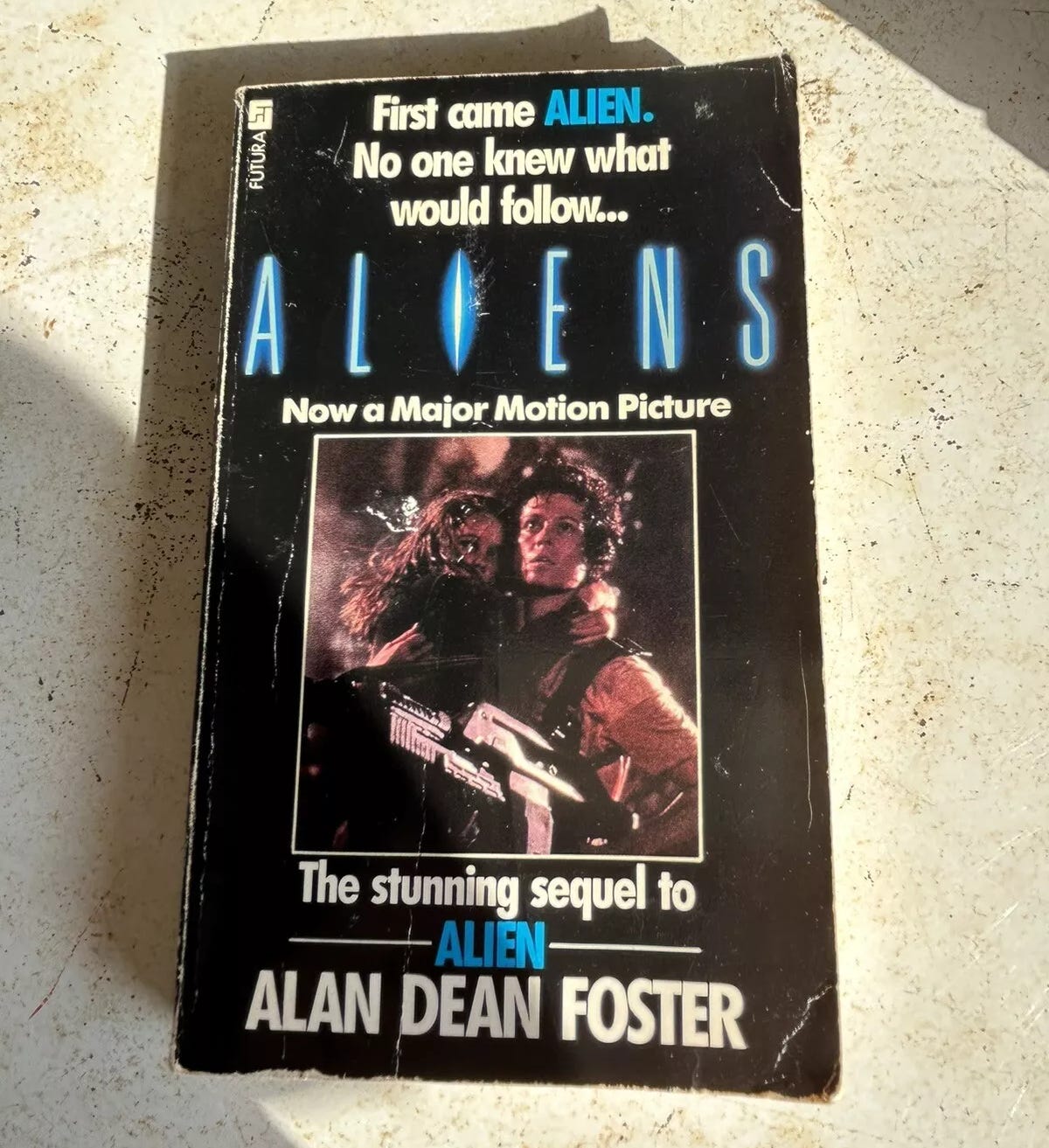
This was a book I’d read at lightning speed the previous summer, having stumbled upon it in a gift shop on holiday in the Lake District. I had no idea they had been making a sequel to Alien and unable to wait for the film to arrive, I bought it there and then, desperate to find out how the story could possibly continue.
Mrs Alderson was wise enough to recognise that if I had a genuine passion for this story, it would motivate me to think more carefully about my assignments and therefore do a better job on it than a book I had absolutely no interest in.
That said, I suspect that when I needed to refer to this book while writing my assignments, the temptation to scan through a VHS copy of the film (kindly recorded off Cable Premiere by my fellow pupil Joanna Turner), rather than reference the book directly, must have been tempting.
The one assignment I distinctly remember writing (probably because I came across it in my Dad’s loft some years ago), was one in which you had to take a character from your book and place them in a completely different situation. I chose the space-marine, Corporal Hicks and placed him in the present-day, on a passenger plane that was about to crash into the ocean. To say that the essay was full of clichés (and spelling mistakes) would be an understatement, but I did at least get some enjoyment writing it.
Unfortunately, in my final and most important year, I ended up with a different English teacher who couldn’t control the class and so I had another panic attack. My parents, once again, explained the situation to Mrs Alderson’s who amazingly convinced the school to let me switch back to her class, so that I would continue to get the discipline and order I needed to achieve the required standard.
I eventually ended up with a D in English Literature and a C in English Language, which was good enough to get a place at art college, but if you compare my course work against my daughter’s beautiful writing today (she is still only thirteen), I’d say a D and a C were pretty generous. The point is of course, that without Mrs Alderson’s encouragement, my grades would have been lower, meaning I would not have been accepted into further education.
In the end, my writing ability, while still poor, was sufficient enough to get me through nine more years of further education, where I finally reached a level of writing that was accepted in the professional realms of screenwriting, gaining a literary agent at one of the UK’s oldest and most respected agencies - The Curtis Brown Group.
Yes, a screenplay may only be a blue-print to a film, rather than a masterpiece of literary fiction and yes, I still struggle with spelling, vocabulary and word recall, but when you compare my latest screenplay against my ‘Corporal Hicks’ assignment, the progress I have made seems mind-boggling to me.
On the surface, Mrs Alderson’s early help and encouragement might have appeared to have had very little to do with my future successes, but on reflection, I believe it was foundational. I am therefore deeply grateful to her for all of her patience and encouragement, and for bending the rules to accommodate a learning difficulty I did not know I had until much later in life.
What strikes me most, is that she didn’t have to do any of it. She could have insisted I stuck with Silas Marner and refused to have taught me in my final year. But she didn’t, instead she created a spark of possibility out of a seeming impossibility - and that spark, however small can never be underestimated.
Paul Buck
By the time I finished secondary school, I was telling everyone that I wanted to be a Special Effects Designer. The main reason for this was watching so many ‘making’ of documentaries on TV, from my favourite films - the first and most influential being SP-FX - Special Effects of The Empire Strikes Back. Up until then, I had no idea you could have a job making monsters or blowing up miniature models.
Unfortunately, living in Maidstone, I had absolutely no idea of how one would get into something like that. Being far more artistic than academic, the natural place to start seemed to be art college.
I remember looking around Medway College of Art & Design in Rochester on an open day and being thrilled by their HND model-making department. The detail in the architectural models were amazing, but it was probably the full-size Dalek someone was building, that clinched it for me.
Unfortunately you had to do an Ordinary National Diploma before a Higher National Diploma and so it was recommend to me that I apply for the Spatial Design OND course - a subject I had very little knowledge or interest in, but if it led to an HND in model-making, then so be it.
However, after a year of frustration, mostly due to having too abstract briefs, I felt disillusioned with the course and so my tutor Richard Kerridge, allowed me to move downstairs and finish my OND in Product Design instead, where I’d get to do a lot more commercial based model-making. Even this though was not really me and so I tended to go off-brief in order to satisfy my interests, being affectionately described as ‘a bit of a maverick’ by my new course tutor.
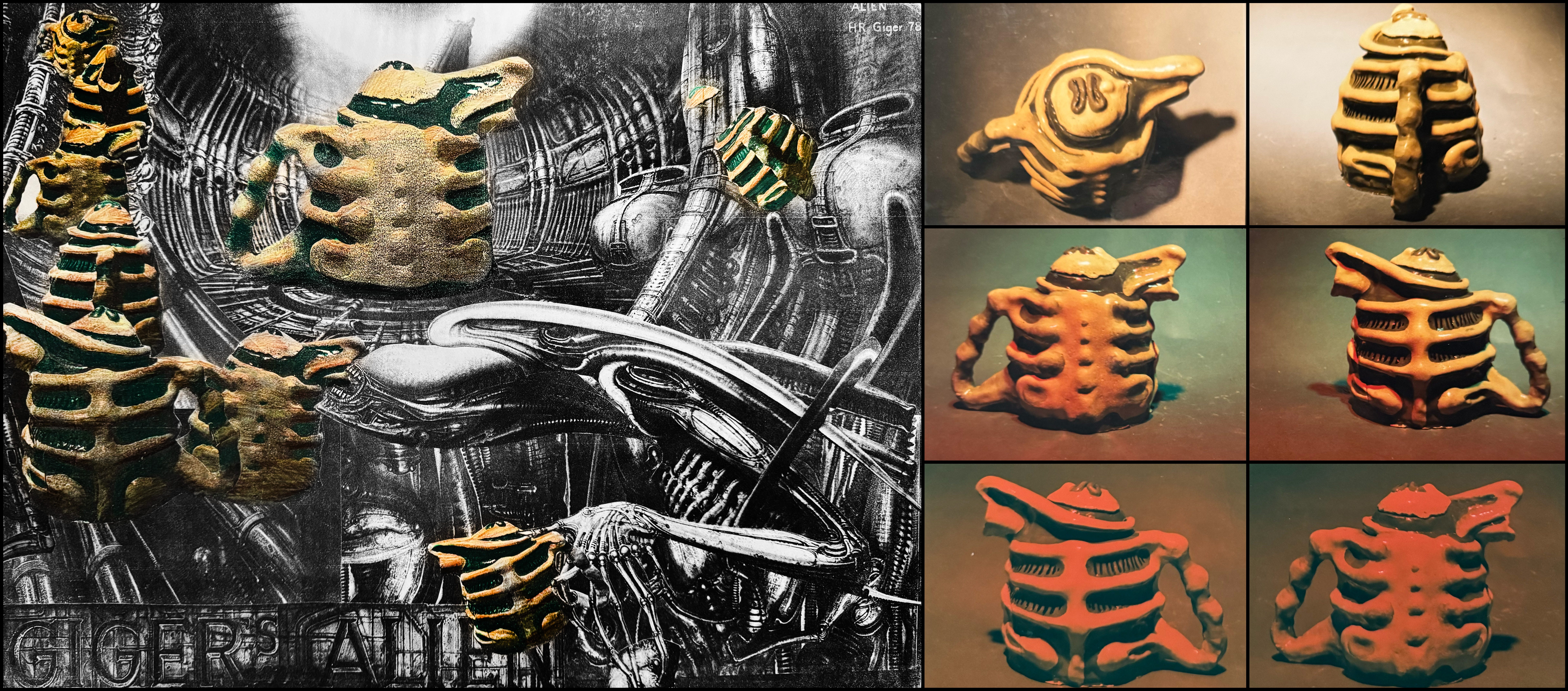
For example, one of our projects was to design a teapot. Bearing in mind we had to think about its functionality, usability and ergonomics as a ‘product,’ I of course ignored all of that, designing my teapot around the film Alien (1979), influenced by the grotesque design elements created by the Swiss biomechanics artist H. R. Giger.
My teapot was basically a face-hugger wrapped around an egg, with its tail curving around to form the handle and the very tip being the spout. It was heavy, barely held a full cup of hot tea and when you tried to pour, it just dribbled down the side. It was completely useless as a ‘product’, but I thought it could make a fantastic piece of film merchandise!
Another project was to make a marble machine with my trusted side-kick Matt Jacobs (who was also a film and comic book geek, especially for the new 1989 Batman movie). We of course came up with ‘Indy-Marble Jones’, making the marble cross over a rope bridge, travel in a mine car, weave past spikes coming out of the floor and scraping past boobytrapped doorways before being blowing up at the bottom. This time around we DID impress our tutors and were both awarded a distinction for our efforts, but by the time I had finished my course, an HND in model-making was no longer the direction I wanted to go in.
On every Monday at college, we would get to try out half a term’s worth of different art forms - life drawing, screen printing and linocutting for example, but it was the half-term of ‘audio visual’ that would change my career direction.
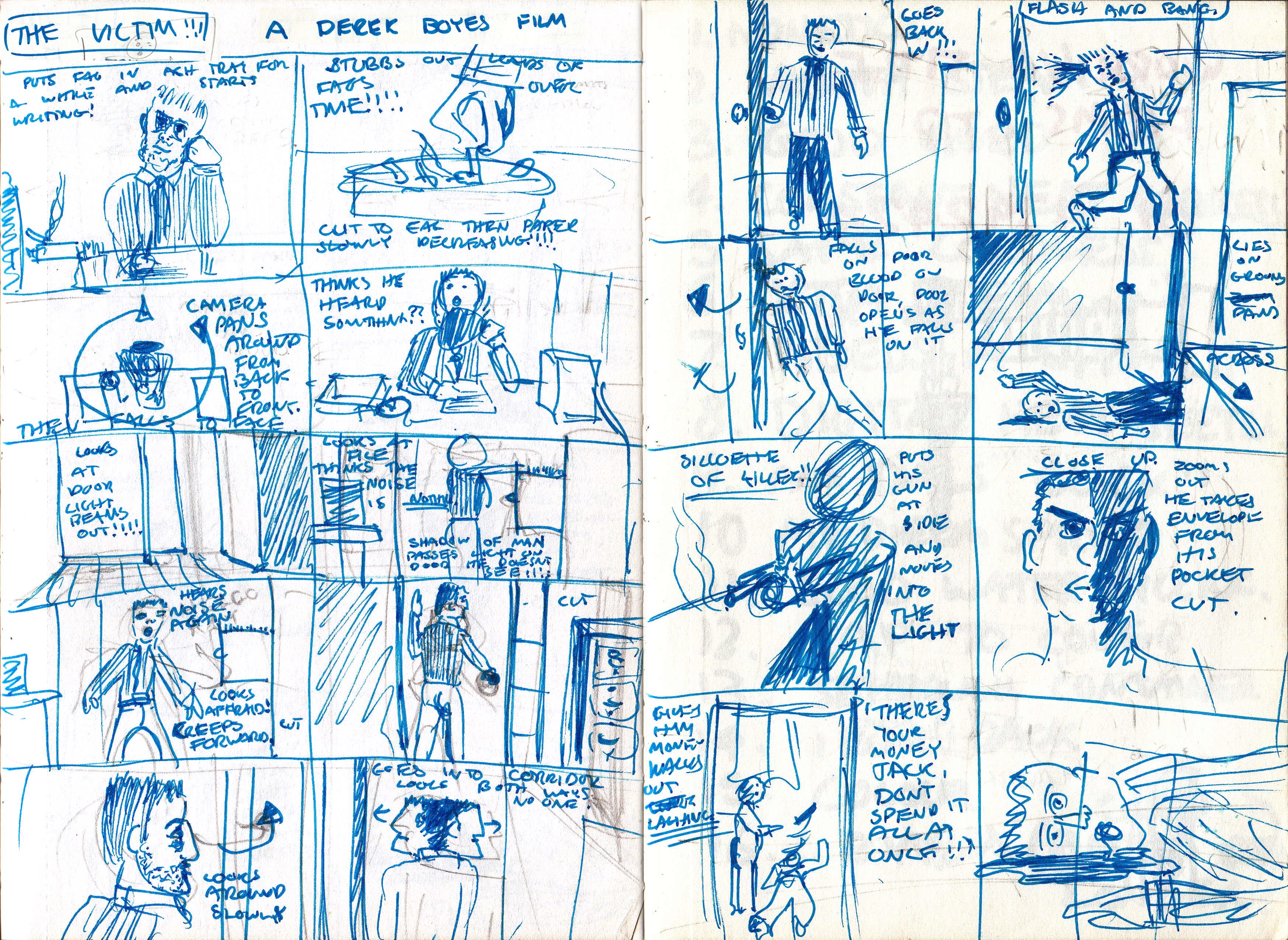
I remember we had to make a short 3-5 minute film. I was teamed up with my friend Matt Jacobs again and Lee Sutton - the only female in our ‘Product Design’ year (who coincidentally went on to become a special effects model-maker). Our film was titled ‘The Victim’ and involved a private detective, working late at night at his desk, when he hears a strange sound outside the office. He checks the corridor and is relieved to find it empty. As he re-enters the office, he is shot in the head by an assailant, hiding in the dark. It was our homage to the film-noir detective film and filled with as many clichés and tropes as you could pack in, but it was loads of fun.
Sadly I never retained a copy of it to keep - it is probably the only video I ever made that I have lost. However, I do still have the storyboards I drew for it in an old college sketchbook.
The point I am slow to make here is that we were able to edit the film on a semi-professional VHS edit suite that until then, I had no idea existed in college. This to me was amazing, because back at home, I was spending every waking hour, prepping, planning and shooting a sequel to Aliens, starring an array of old school friends, borrowing a VHS, VHSC, Super 8 and Video 8 camera, but had no way of editing the footage. So I hesitantly asked the audio visual tutor if I could use this edit suite to edit my Aliens sequel and to my surprise he very kindly said yes.
The man in question was of course Paul Buck and unlike any other adult I had met to date, he took a genuine interest in my video making. After several conversations during lunch breaks, where I had access to use the editing equipment, Paul gained some insight into my ambitions and my frustrations at college, asking me if I had thought about applying to film school instead.
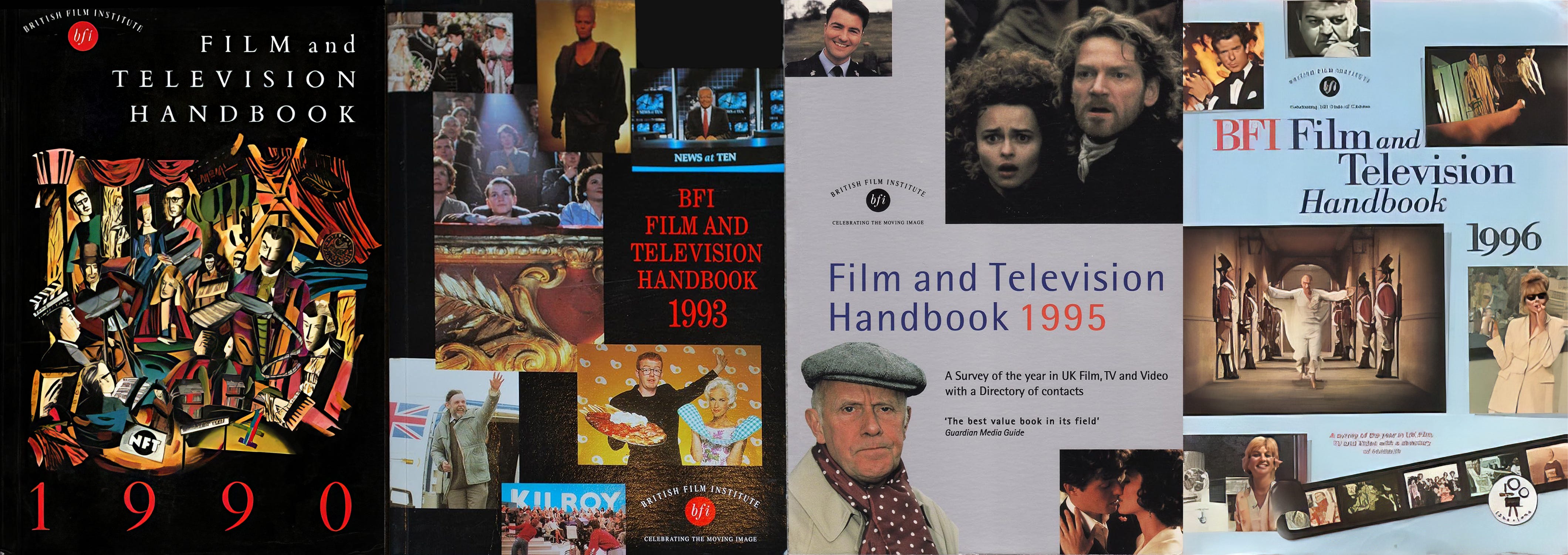
I had only ever seen adverts for The London Film School in film magazines and understood it to be ridiculously expensive - certainly not something the Kent County Council would ever pay for. However, Paul informed me that there were several HND film courses popping up around the country and that I should look into them. He advised me to get hold of the latest copy of the Bfi Handbook, which each year published a list of all the film and media courses available in the UK, what each course offered and what you needed to apply.
Paul also advised me to visit the local market and go through all the second-hand book stalls to find a book of short stories. Choose one I related to and adapt it into a screenplay to make as my next film, so that I could concentrate more on improving my filmmaking skills without having to worry about story.
First I got my local library to order in a 1990 copy of the Bfi Handbook and used it to research and then visit several HND filmmaking courses in Bournemouth, Gwent, Manchester and Farnham, presenting my art portfolio and an Aliens 3 trailer at interview, but I failed to gain a place at any of them. Eventually, a kind tutor at Gwent told me the reason I wasn’t getting anywhere, was because an OND in Product Design was not ‘relevant’ and so my short trailer, on its own, was not enough proof of my talent and commitment to gain me a place.
Frustrated, but undefeated, I wrote a letter to the Kent County Council, explaining my predicament and asking if they’d consider awarding me another grant to undertake a ‘relevant’ OND, so I could then get into an HND in filmmaking. Miraculously they said yes, but I had another whole year to wait before I could re-apply, so I took Paul’s advice and picked out a second-hand book of short stories, from the Maidstone market.
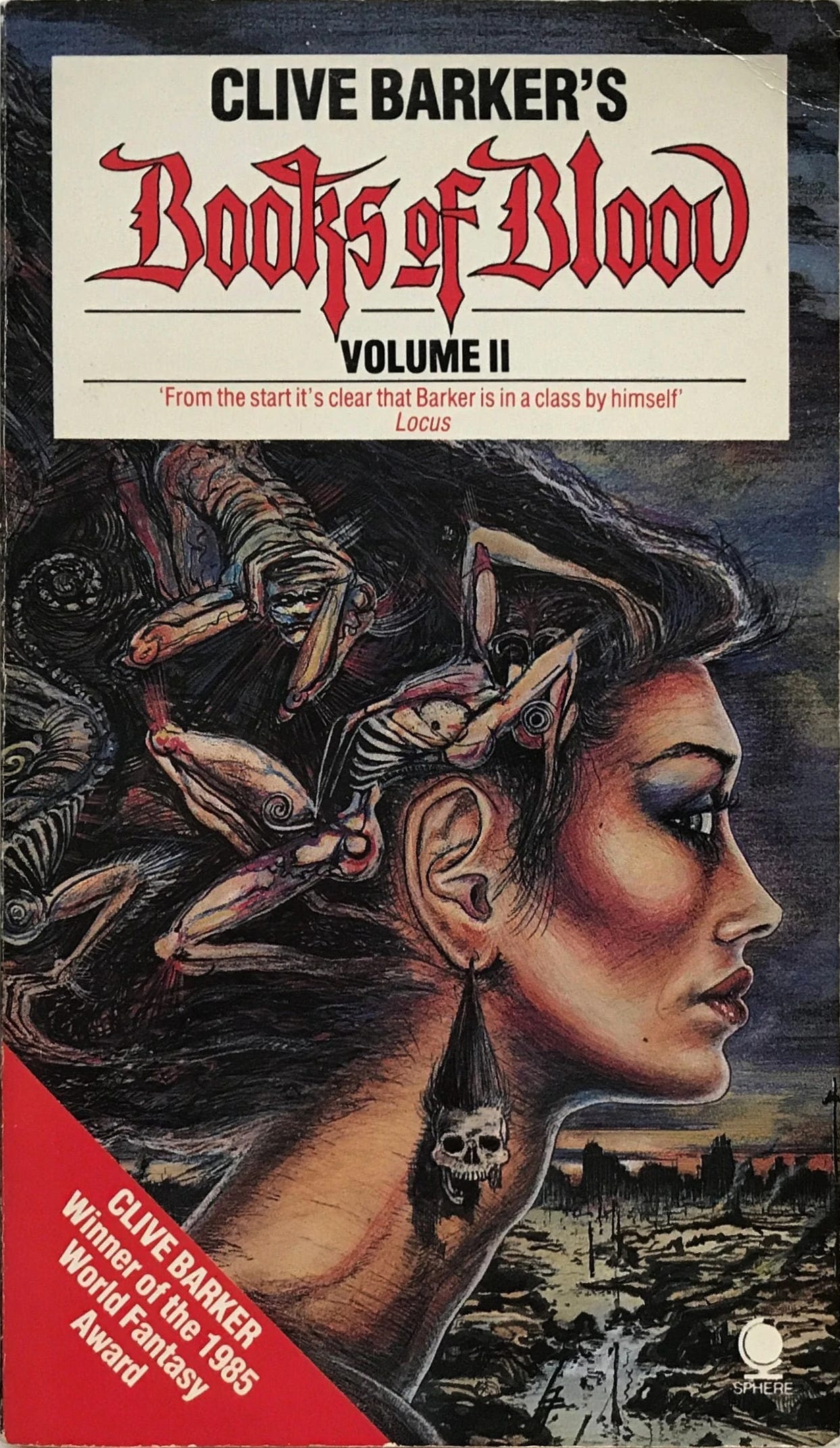
It was called Clive Barker’s Books Of Blood - Volume II. I read the very first story called Dread and couldn’t get it out of my mind. This was the story I was going to adapt. Over the next year I managed to shoot 75% of the story.
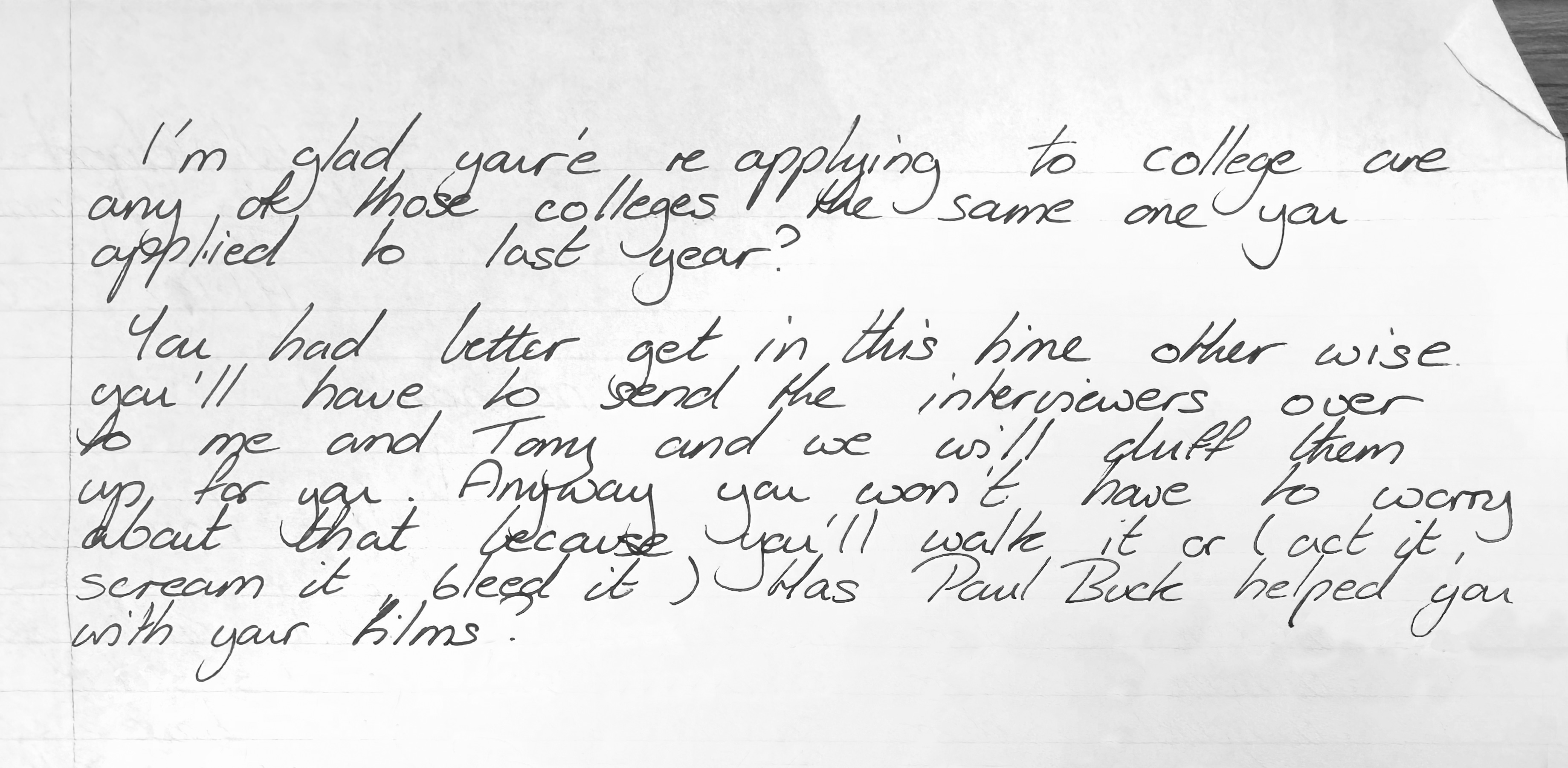
By the time I was invited to interview for media production OND courses, I had cut a trailer of Dread as part of my showreel and the reactions to it were very positive. In fact at the end of my interview at Harrogate College of Arts and Technology, I was offered a place right there on the spot.
Thanks to Paul Buck, I was finally on the right track, but by now it had been over a year since I’d left Medway college, which for a nineteen year-old, felt like a life-time ago. As my career pushed forwards, I began to feel more and more regret for not taking the time to thank him when I’d had the chance.
So, to finally track him down after thirty-four years has been just wonderful. Over the last few months he has been enthusiastically watching all of the short films I’ve made via my website and yesterday, I finally got to spend a lovely afternoon with him and his wife Catherine, at their home in south London, reminiscing and sharing anecdotes about our lives over the last three decades. I even came away with some of Paul’s work to read - a book of his essays on art, film and literature and his 2020 novel Along The River Run which I am very much look forward to reading.
Mike Joslin
In the summer of 1991, my Dad and my step-mum Linda, took me up to Harrogate to find some student digs. I settled on a large twin room in a lovely Yorkshire stone detached house, halfway down Bilton Lane (up in the northern part of Harrogate). The landlady was a little scary, as she was quite stern, despite being perfectly polite to me.
I moved in a few weeks later, only to discover her husband was one of my course tutors (the same one in fact who had offered me a place on the course at the end of my interview). His name was Mike Joslin. I was not sure I felt entirely comfortable with this fact, concerned I’d be thought of by other students as being a teacher’s pet for living in the same house, but as it turned out, nobody seemed to care.
As Bilton was on the opposite side of town to Harrogate College, I’d often get a lift with Mike in his silver Volvo Estate. It had real leather seats, which to me felt super luxurious. Volvo’s were still considered the safest cars in the world back then and they had plenty of space in the back for two children and a large family dog in the huge boot. I remember thinking that when I was older and had a family of my own, I’d get one exactly the same. Unfortunately I actually ended up inheriting the complete opposite - a Smart ForTwo.
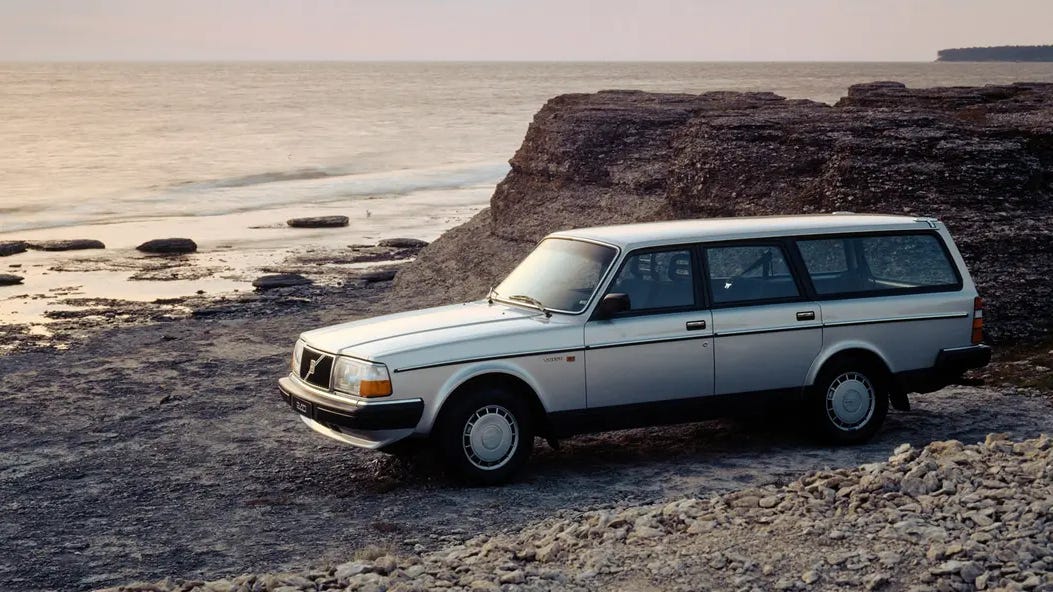
On route to college, Mike would insist on listening to Classic FM, which I didn’t actually mind as it felt cultured and reminded me of being in the car with my Dad, who also loved classical music. Autumn in Harrogate was stunningly beautiful and I remember Mike driving us down Oatlands Road, lined with row upon row of mature trees, shedding their golden leaves either side of us and him telling me that listening to Radio One compared to classic FM, was like eating chewing gum - lots of flavour but no sustenance. The analogy must have really impressed me for it to stay in my memory all this time. It’s clear to me now that even in those first few months, Mike was having an influence on me.
By the end of my first year, my landlady and Mike had unfortunately split up. As a result she was selling up and so I needed to find somewhere new to live for my second year. I decided to come back from the summer break early, to prep for my first 16mm film. I was planning to shoot it in October and had managed to find some very cheap, but temporary accommodation with the family of a girl I worked with at the local Odeon cinema.
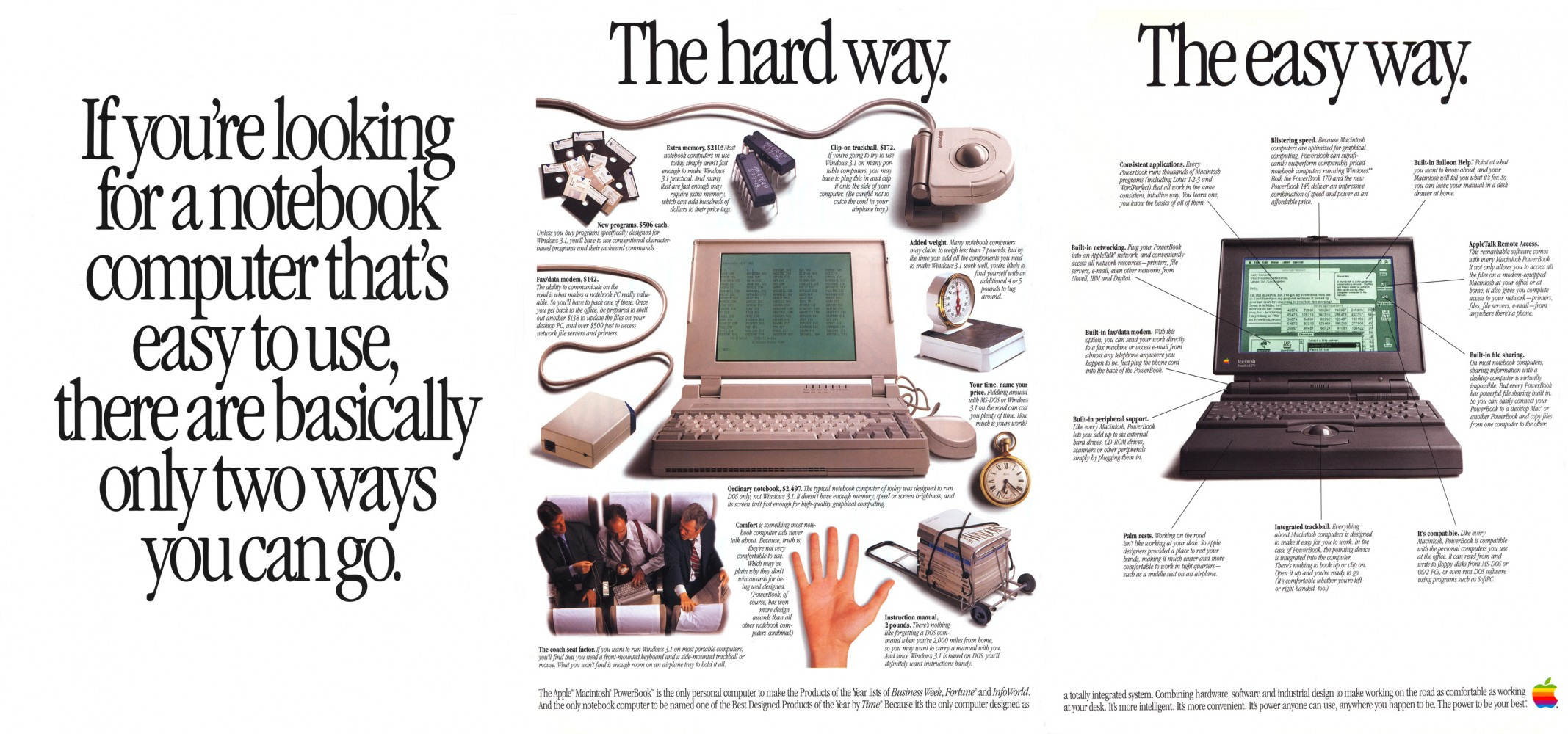
I wanted to type up a load of pre-production documents, but wasn’t allowed access to the college’s Apple computers until the new term started. So I must have managed to get Mike’s new home number from admin, calling him to ask if I could use his Apple Macintosh laptop (a very exciting piece of technology for its time). He very kindly agreed and gave me his new address. I peered out of my window in surprise, to find he was living directly opposite me.
Mike’s new house was modest in size and architecturally rather bland, but inside it felt warm and welcoming, a middle-aged man’s den, with a very natural feel, partly due to its rustic wooden furniture and an array of house-plants. Mike had once been a glass blower in a previous life and examples of his amazing glass work were scattered around the house, adding to the cultural appeal.
After several more visits to use Mike’s laptop, he ended up offering me his spare room to rent. I’m guessing he was in need of the extra cash and realising I’d have 24 hour access to his computer, I of course said yes. Just like that, we were sharing a house again, except this year, I was not going to be as quiet and inconspicuous.
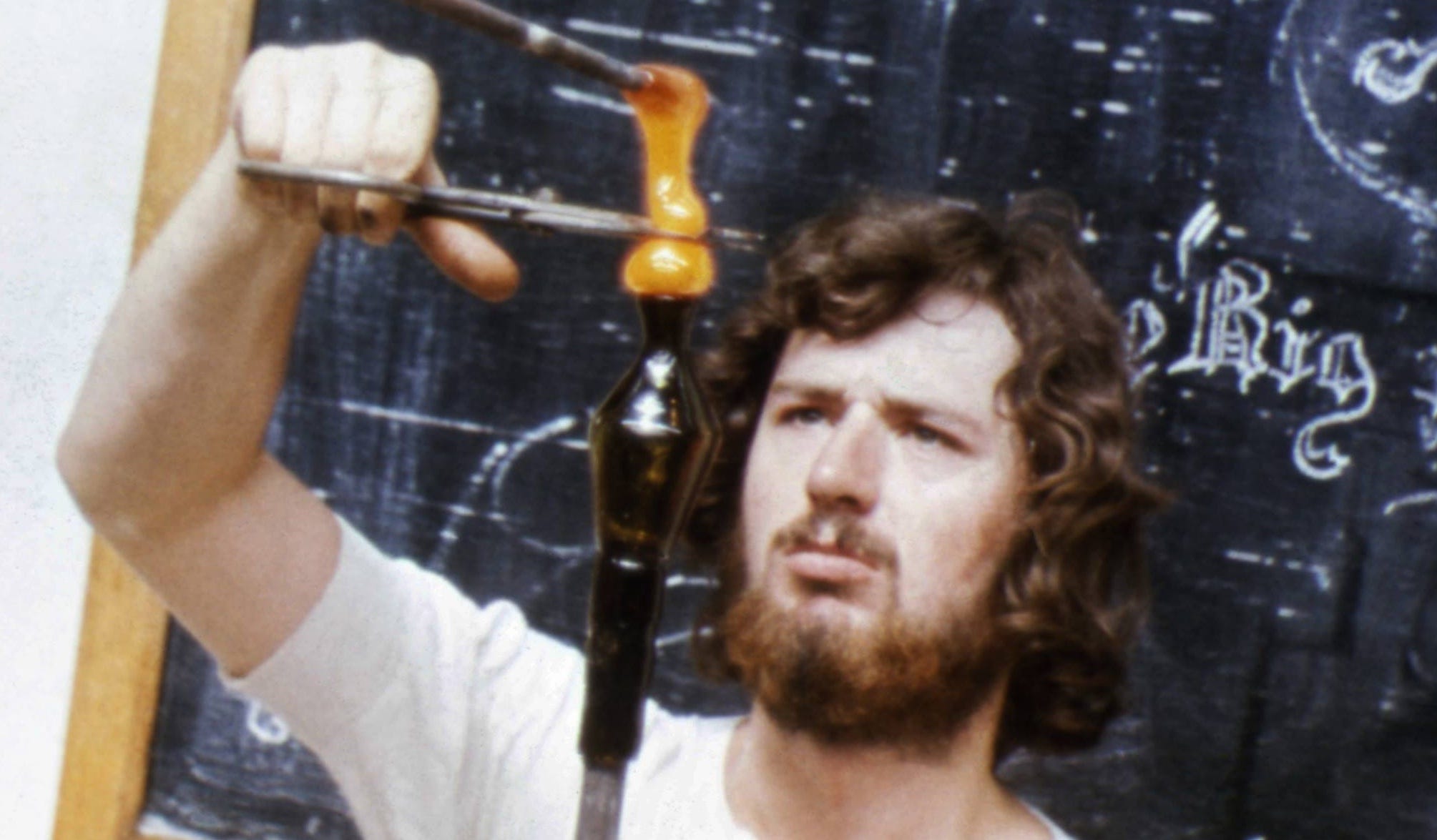
I can’t recall the specifics, but at some point Mike agreed to play the evil King in my upcoming fantasy production. His deep bellowing voice and maturity were perfect for the part, especially considering the rest of the cast were so young. He added a bit more credibility to the film and became an unofficial ‘supervisor’ to the shoot, reigning in my ambition at times to reduce the likely chance of injury or death.
Unfortunately our first attempt failed due to a camera malfunction. We were using a clockwork Bolex, loaned to me by the course leader Graham Moore, who up until this point had treated me as one of his star pupils. I don’t know whether he thought I blamed him for the malfunction or whether my ambition and determination to make this film was stealing too much of the limelight from the actual course, but for the rest of the academic year, he went out of his way to mock and verbally abuse me in front of my peers and hinder my progress, ending in him writing a damning reference on my university application form, that he somehow managed to slip past administration unchecked. Unbeknown to me at the time, this malicious act prevented me from getting onto any degree course in the following September and was the first time in my life I’d experienced such blatant vindictiveness from another human being.
Mike had already privately (or maybe not so privately) expressed his dislike for Graham, who was far too self-absorbed to be a tenable course leader. Moreover, he was unreliable and would regularly go off sick for days on end, with dubious illnesses like ‘red eye,’ leaving Mike, the other tutors, technicians and students to fill in the blanks.
Having had to endure the same over-dramatic rhetoric and tall tales every year from Graham, I suspect Mike’s willingness to support me in getting my first 16mm film off the ground was as much about nurturing my passion, as it was about winding Graham up and it obviously worked spectacularly.
I scheduled our second attempt at making Drakkon for the middle of July 1993, just after my OND course finished. This gave me a lot more time to improve the script, create more props and costumes and find somewhere to rent some professional, yet affordable film and audio equipment (due to the fact that it had seen better days). For our special effects guru Chis Eldridge, it also meant he had the time to complete a full-sized animatronic dragon head, to complement the baby dragon puppet he’d created for our first attempt.
Chris ended up moving into Mike’s house too, taking the other spare room that had previously been full of Mike’s unsorted possessions. The house became a hive of creative activity for several months - a mini production base and equipment store, all at the expense of Mike’s privacy and space. There was admittedly one time I unintentionally tested Mike’s patience, when I littered his house with bulky film equipment on the day he was supposed to be having guests around for dinner, giving him more than enough reason to kick me out, but thankfully my obvious shame and embarrassment when confronted, was enough for him to forgive me.
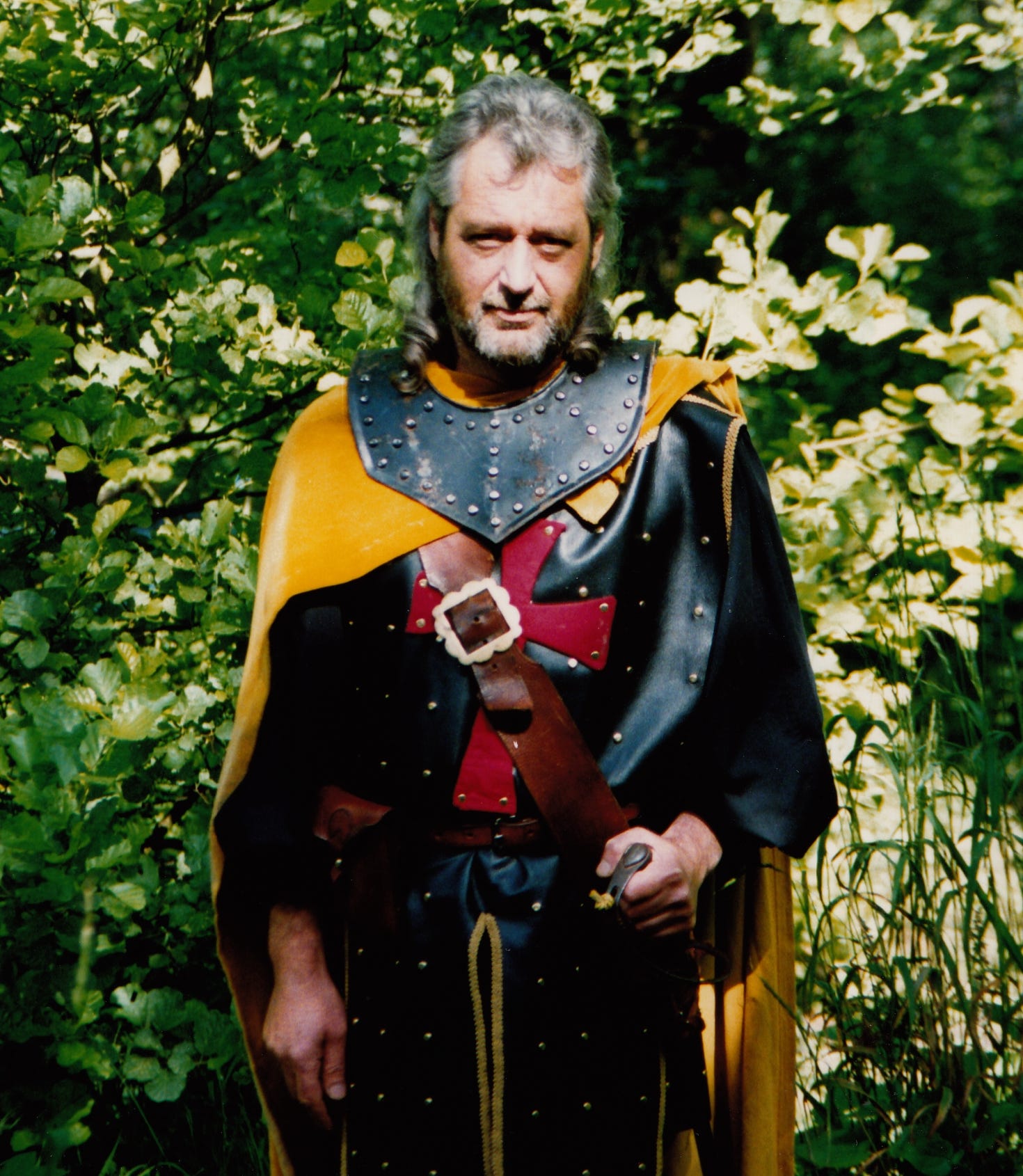
By the time we were ready to shoot, Mike’s new girlfriend Gaynor, was nine months pregnant and her baby was due any day. Despite this, Mike still agreed to come with us filming on location in West Burton for the next five days. He even volunteered to camp out in a tent, above the waterfall each night, to look after the heavy equipment, so that we didn’t have to lug it up and down the steep, unstable, muddy path every day.
On the last or maybe second to last day, having made regular calls home, Mike eventually dashed off, having learned his girlfriend had gone into labour. They named their baby girl Georgia - the female equivalent of George (and the dragon). Amazingly Mike returned for the last day of filming, to shoot his scenes on the horse, down by the woods at the back of Hornbeam Park.
Having since become a parent myself, I now realise just how committed he must have been to our cause, giving up so much of his free time, at a pivotal moment in his life, that might have risked missing his own daughter’s birth.
Mike had been a real surrogate father-figure to me in what was two of my most formative years and I have considered him my second Dad ever since.
When all my fellow students headed off to their new colleges and universities, that September of 1993, I reluctantly moved out of Mike’s and returned home to Maidstone, but the injustice of being cheated out of a university place by Graham only made me more determined.
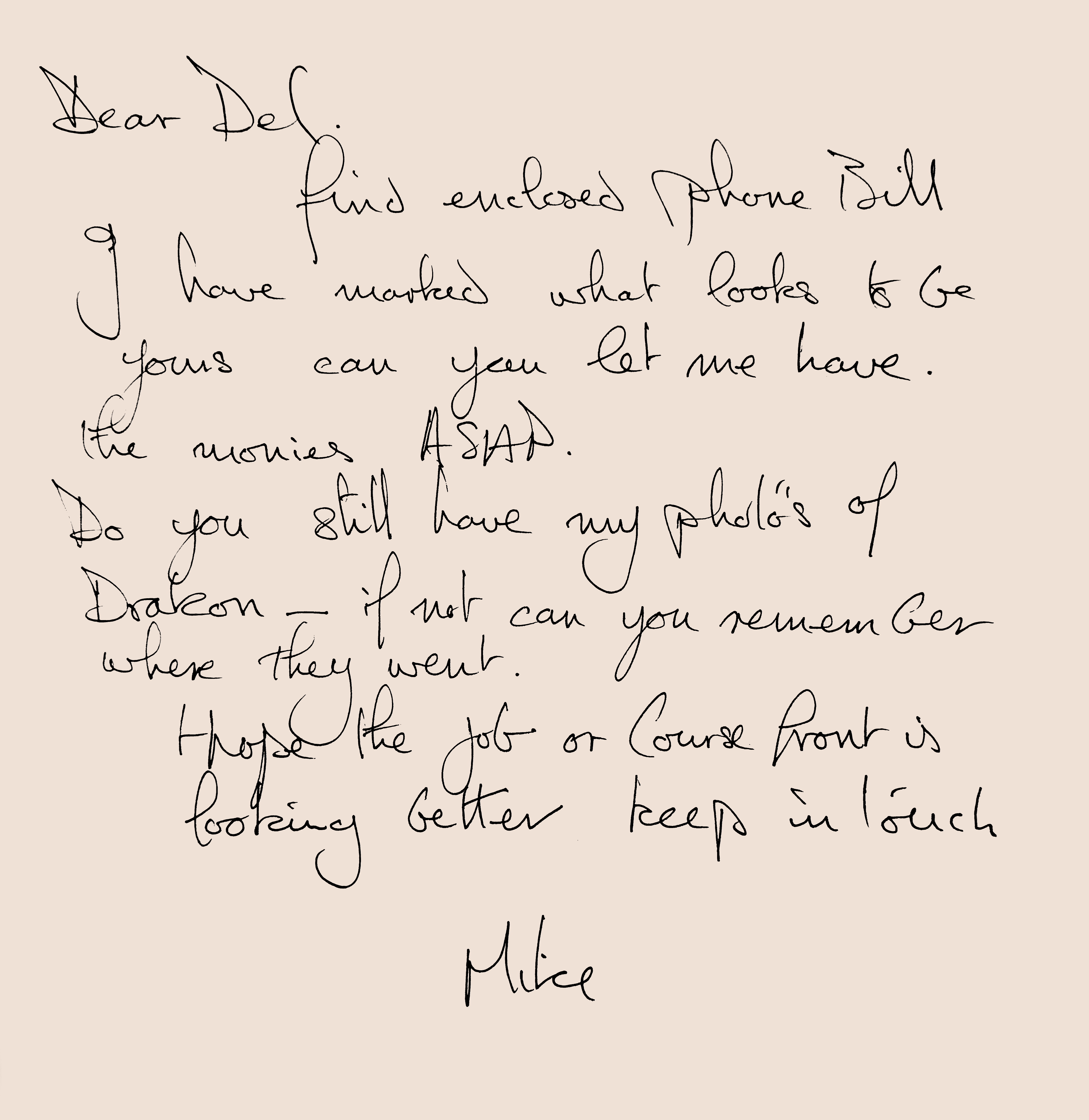
Twelve months later, I attended my university interviews again ready for a fight, this time without a damning reference and instead, my ambitious 16mm fantasy film - Drakkon. To my surprise there was no resistance this time. The film impressed my three interviewers enough to secure me a place on the Media Production course at the University of Northumbria, where three of my fellow crew were already studying.
In 2013, seven of the original cast and crew, including Mike, met up for a 20th anniversary Drakkon reunion. Apart from the obvious twenty years taking its toll on all of us, being back at the waterfall in West Burton with everyone, brought back so many fond and vivid memories, as if it had only happened yesterday.
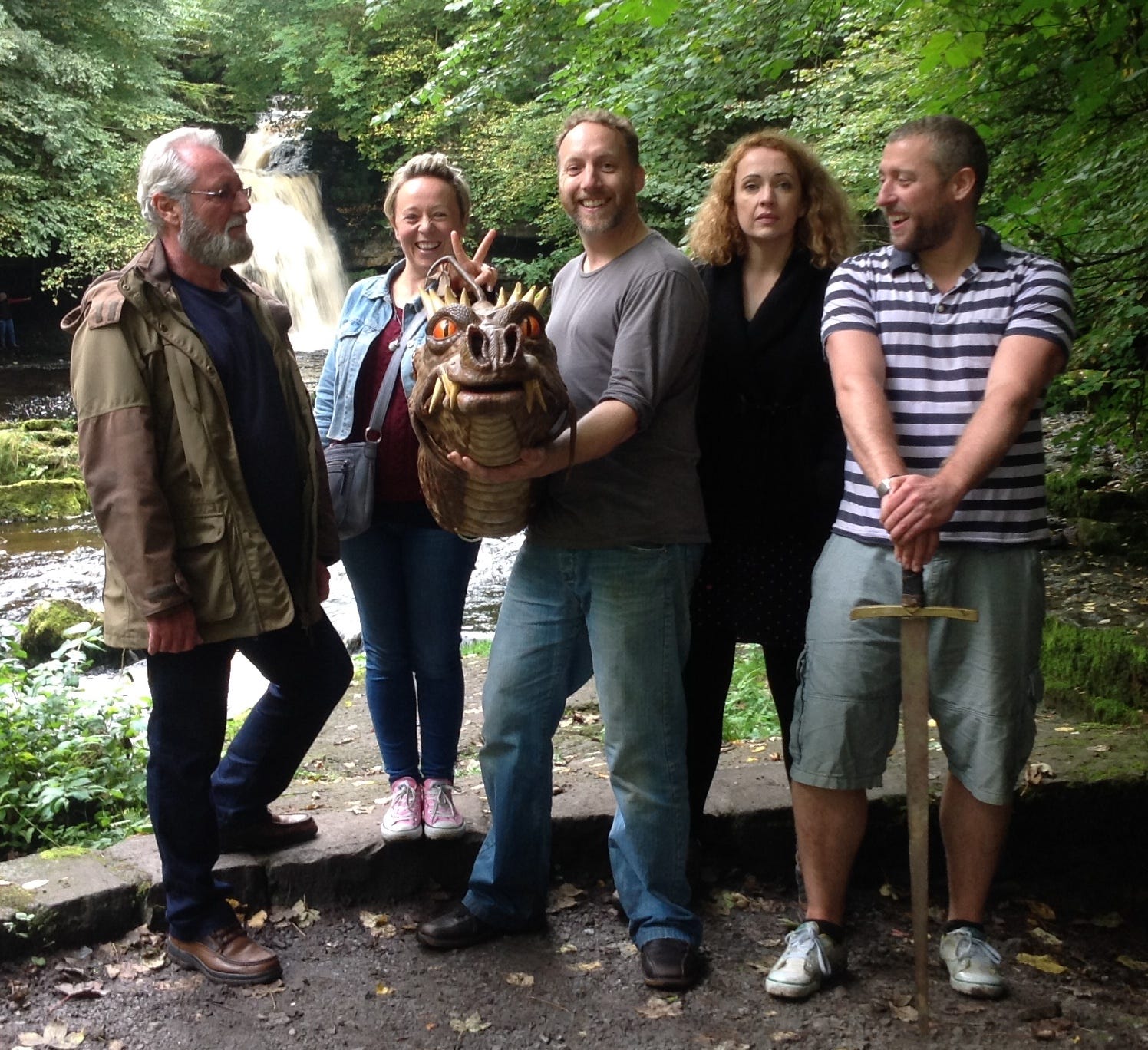
I always try and pop in to see Mike when I’m passing through Harrogate. The last time was in 2019, before Covid, so I think it’s time I paid him another visit soon.
Not long after my Dad died in September 2022, I noticed Mike hadn’t posted anything on social media for quite some time. Having emailed him and had no reply, I got scared something had happened to him. I eventually plucked up the courage to phone him on his landline (a seemingly intrusive thing now we have text messaging). He eventually answered and I breathed a sigh of relief. He apologised for not replying to my email, explaining that he had been suffering from a bout of depression, after a medical procedure, but was otherwise still very much alive and well.
Rick McCallum
I was in my last year of University when I heard that Lucasfilm was going to be making the Star Wars prequels in England. I felt a growing excitement swirling around my chest, at the very slim possibility that I could potentially, in some way, be a part of it. As a result I began practicing a young Alec Guinness voice, just in case!
Unbeknown to me at that time, my good friend Isobel Thomas was coming to the end of her job as a rushes projectionist on Mortal Kombat: Annihilation and would soon be surreptitiously plucked out to join a new film crew, who were moving into Leavesden Studios, to prep for Star Wars - Episode One.
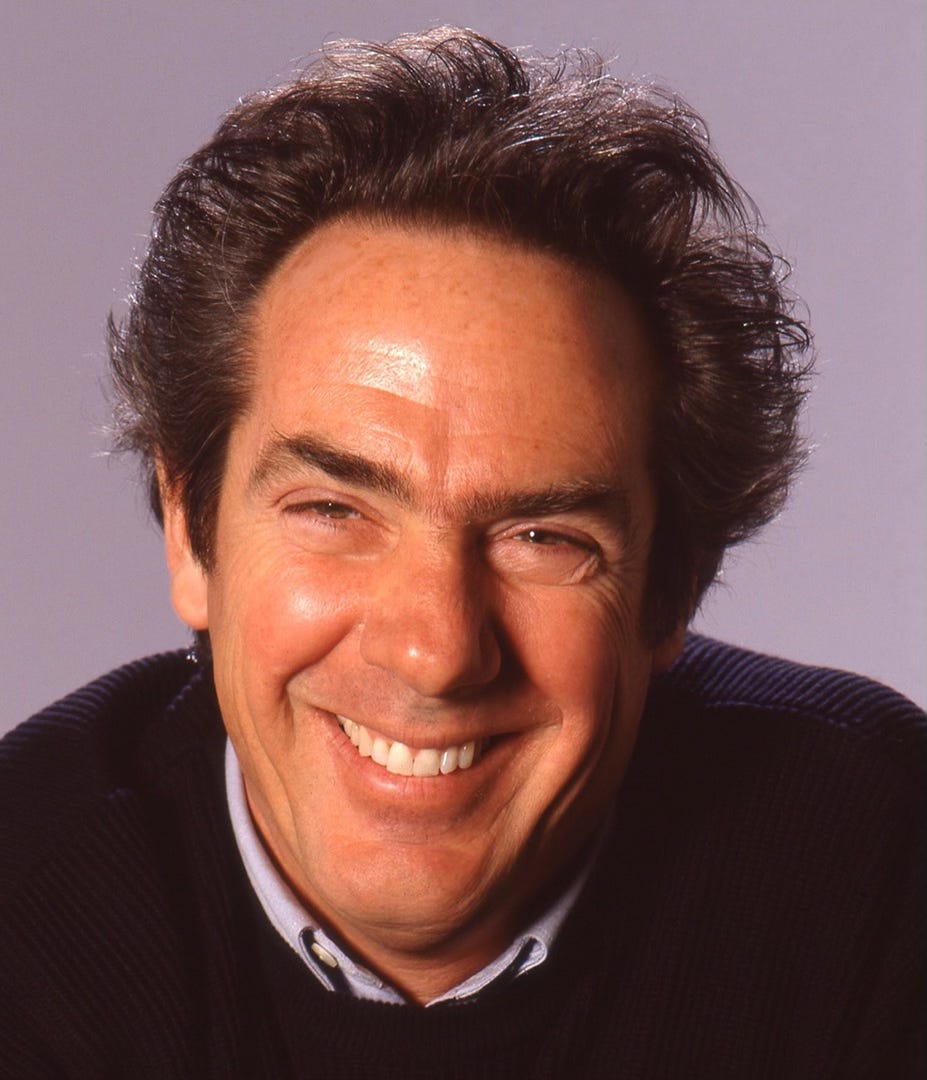
Within just a couple of months, Isobel got promoted to producer’s assistant for Rick McCallum, sharing the office with him AND the legendary George Lucas. I was ecstatic by this news, gripped by every detail she reported back to me. She instructed me to get myself a student contract mobile phone from the Orange store in Newcastle city centre, saying that if a job came up, I’d have to answer straight away and say yes.
I kept the mobile with me everywhere I went and after a few weeks I finally got the call. They were looking for a second unit floor runner and invited me down to Leavesden Studios for an interview. I packed up my student digs immediately and headed home.
My Dad drove me up to Leaveden for the interview, where I met the second unit’s first assistant director, outside the interior set of Anakin’s hovel and as far as I could tell, it went well. Unfortunately, it was decided they couldn’t afford a floor runner for the second unit and that was the end of that.
However, a couple of weeks later, Isobel was in the office with Rick, discussing the huge stacks of paperwork that had come over from the States, but that nobody had found the time to file. He asked Issy to “get someone in you trust” to clear it. Thankfully she chose me!
My fantasy (of which I’d been having reoccurring dreams about) was that I’d be introduced to George Lucas, that he would go to shake my hand out of mere politeness, but then notice the spark of imagination in my eyes and announce to everyone that I would be his apprentice.
Of course this was not what happened. I didn’t even get to shake his hand, but he did politely acknowledge me on my first day, which in itself was thrilling.
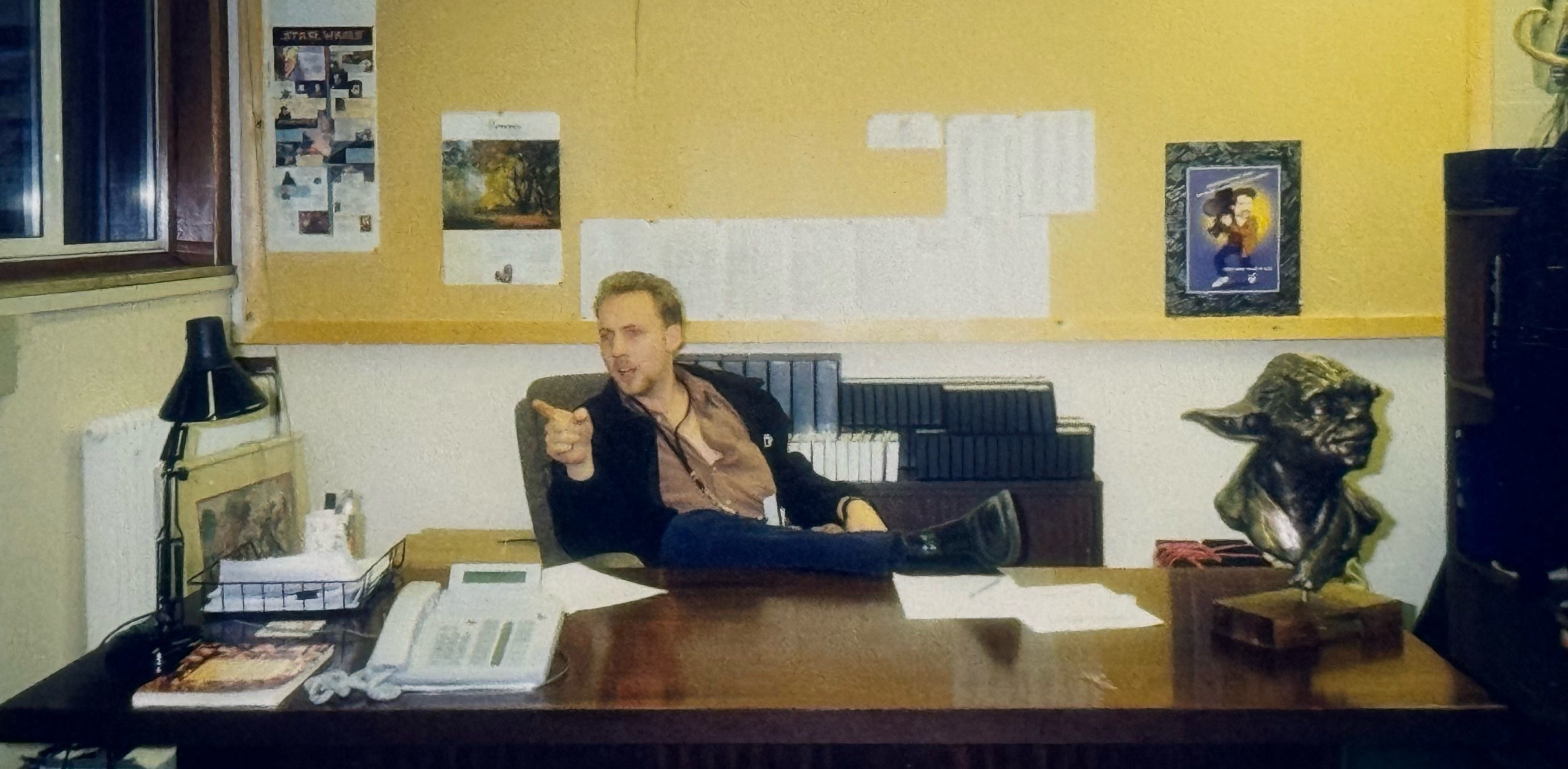
What did happen though, was that my one week of filing got extended to two weeks and being in the office twelve hours a day, I got to spend quite a bit of time with Rick MacCallum. He was obviously far more of a mentor to Issy, but through our conversations, he got to learn a little more about my ambition to write and direct, which he was more than encouraging about.
After one of these ‘career ambition’ chats, he gave me a copy of Screenplay by Syd Field and advised me and Issy to “just go out there and do it, now, while you’re still young and have no commitments!”
Rick had one of those addictive personalities. Everyone adored him, despite the occasional temper when people let him down. He was unashamedly loud, fun, positive, shrewd, generous, fearless and hard working, inspiring you to be your very best. He also spoke his mind without a filter, which meant you knew instantly where you stood with him at any one time.
On my very last day of filing, I was feeling pretty low. I had got a taste for this amazing world and wanted to stay in it. Isobel had very kindly let me go down onto set for the last couple of hours of each working day, so that I could see how a full-scale production got made and I was addicted. I was trying to be grateful for this amazing two week experience, but in reality I desperately wanted more.
With only hours left to go on that final Friday, Isobel happened to receive a call from downstairs. It was Lynne Hale, the Head of Publicity, asking Issy if she knew of anyone who could assist their chief stills photographer, Kieth Hampshere? Issy looked me straight in the eye and said to Lynn “Actually I do and he’s standing right in front of me. I’ll send him down.” I met Lynne, who introduced me to Kieth and that was that. I had a job on Star Wars Episode One for the rest of the shoot.
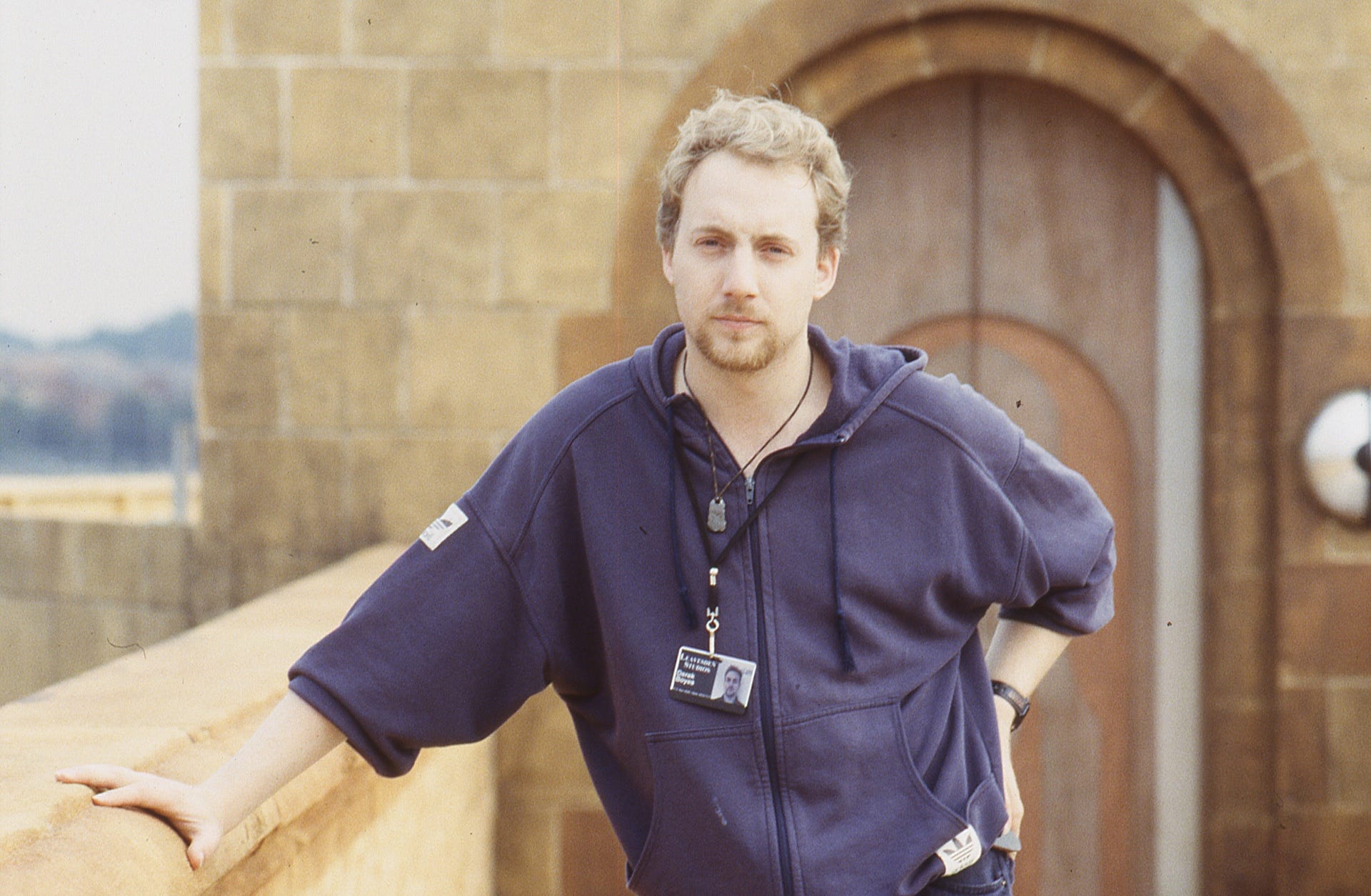
At some point during the production, Isobel asked me to come up to the office to entertain George’s eldest daughter Amanda, who at sixteen, having had school in the mornings, would hang out in the office in the afternoon, bored and unimpressed with her Dad’s latest ‘Blah War’ project.
I decided to bring in some of my short films for her to watch and was thrilled that my university graduation film Talk To Me, made her cry. However, it would be my Star Wars spoof, that made the biggest impression that afternoon. Just as Amanda started watching it, Rick walked back into the office and hearing her laughing, stopped to watch it too, soon followed by the production supervisor, David Brown and then the casting director, Robin Gurland. Isobel kept nudging me with excitement, miming “Oh my God!” - all four of them were engrossed. I can’t describe how thrilling it was.
Afterwards Rick congratulated me and I explained that I had made it for a competition to win a trip to Skywalker Ranch, but that it had fallen through and that nobody got to go in the end. Rick looked at me with a sincere expression and said, “Dude, you can come to Skywalker Ranch anytime - seriously!”
After principal photography ended I continued to work for Lucasfilm until the end of the year, helping log the hundreds of thousands of slides taken for the film. I went home that Christmas wondering where on earth I’d find my next film job, but to my surprise and relief, Rick rehired me again in January to be their UK Archive Co-ordinator (even though I had absolutely no experience in international shipping).
I was given my own office to work from, a computer (taken from the defunct art department) and what I considered a generous pay rise. I even got to hire my university friends, Erol and Bevan to help me pack everything into the containers.
Looking back on it now, it was a pretty big responsibility for a 25 year-old, but he must have believed I was capable of doing it. I taught myself Filemaker Pro from scratch, in order to create a detailed shipping database, while liaising with Lucasfilm and the shipping company (who required a mass of paperwork, correctly filled out in advance), to ship a dozen or more containers filled with props, creatures, droids and costumes, back to the team at the Lucasfilm Archives.
During this time Rick would pop back and forth from the States and on one of his visits, he dragged a bunch of us out onto the wet and weathered Theed set, where I got to play Obi-Wan Kenobi in a rough Betacam version of an additional scene they wanted to shoot for the pick-ups. I got to wear Ewan’s actual costume (with the exception of his boots that were too small), fulfilling my fantasy of becoming Obi-Wan Kenobi.
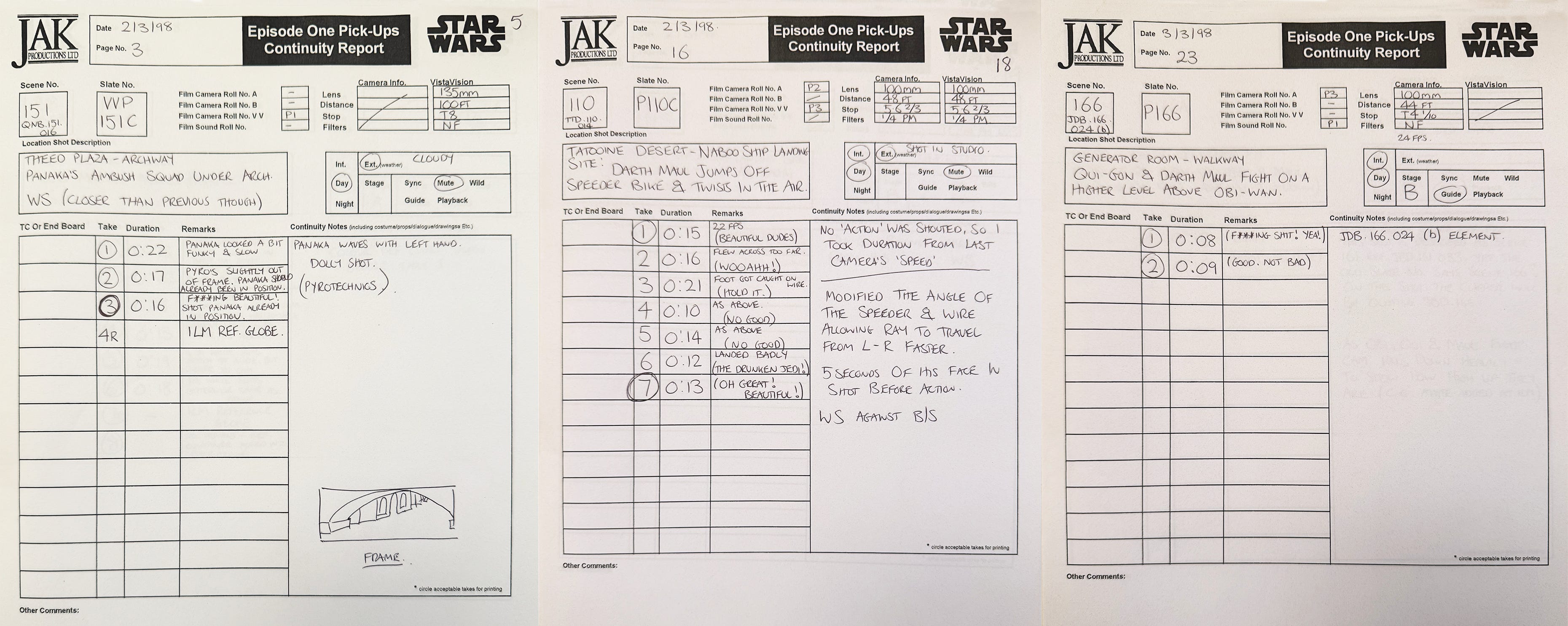
For my role in the March 1998 pick-ups, I have to thank production supervisor David Brown. The Friday before the pick-ups started, he approached me by the fax machine and asked me if I had ever done continuity before. I said I hadn’t, to which he replied, “Well you’re starting Monday!” - This was the culture at Lucasfilm - once you proved your loyalty and competence, anything was possible.
I spend the whole weekend reading through my copy of Continuity in Film & Video published by Focal Press, I purchased a digital stopwatch and created my own bespoke Star Wars branded continuity sheets, to show I was taking the role seriously.
George had to record ADR in London for the first three days, so Rick directed for the first half of the six-day shoot and kept referring to me as ‘the continuity girl with the hairy legs.” In the ‘director’s comments’ section of my continuity sheets, I took pleasure in writing his colourful remarks after each take, which included such statements as: “Fucking beautiful!” “Super perfect!” ”Fucking shit, yea!” ”Wow Daddy!” and “Beautiful dudes!”
When I heard they were moving to Australia for episodes II & III, I was devastated. Part of the deal they struck meant they could only hire Australian crew, except for the HOD’s (Head of Department). If production had remained in the UK, I’m pretty sure I could have become a permanent member of the Lucasfilm family, moving up through the ranks to who knows what role?
By the time they shot the August pick-up’s, I was working as a production runner on An Ideal Husband (also based at Leavesden). I had also just moved into a new unfurnished flat in Hendon and as Lucasfilm were packing up for good, Rick offered me a load of unwanted furniture that included the IKEA denim casting couch from Robin Gurland’s office (where many a celebrity arse had sat), two IKEA chest of drawers from the wardrobe departments (that once stored Jedi costume accessories) and an oval rug made by the props team for Queen Amidala’s quarters on Theed.
Four years later, I was heading back to film school to study an MA in fiction direction at the National Film & Television School. I needed to find sponsors to cover my course fees and so I wrote to every film producer I’d worked for in the last five years, including Rick. When I told Issy what I had been doing, she said that she’d once overheard Rick say that the most frequent question he got asked was “Can I have some money.” Hearing this, I instantly regretted writing to him, I felt ashamed, especially after all the opportunities he’d given me, surely he would have expected better of me than to ask him for money. That said, I suspect his U.S, based assistant would have binned such a request, before he even got to see it. He certainly never mentioned receiving my letter.
Over the years I must have called the Lucasfilm office half a dozen times, to ask Rick for advice. I was always pleasantly surprised that he was still willing to take my calls. Through Isobel, he also gave me permission to come and visit the set on the pick-ups of Episode II at Ealing Studios (and three years later, on the pick-ups of Episode III at Elstree Studios), enthusiastically showing me all their new innovative digital HD filmmaking technology. Even on these visits he would ask how I was doing, taking a genuine interest in what I was up to at film school and encouraging me to “Go for it dude!”
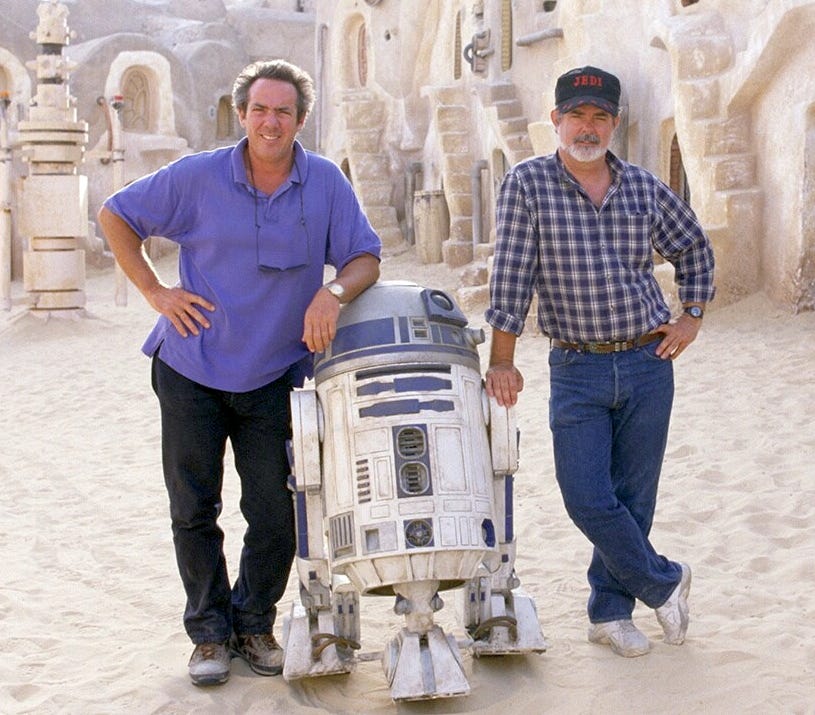
The last time I saw Rick was at Skywalker Ranch a few weeks before Episode III was released. My NFTS graduation film The Happiness Thief was screening at the Tiberon Film Festival, a small town on the other side of the Golden Gate Bridge to San Fransisco and only about a 25 minutes drive to Skywalker Ranch.
I (very easily) convinced a fellow festival filmmaker from Texas, to drive me up there, having sought permission from Rick’s USA based assistant Ardees Rabang. She very kindly offered to give me my long awaited tour of the Ranch, eventually leaving us to spend all our available cash in the gift shop.
Before we left, we headed back into the main house to thank Ardees, where my ‘driver’ then nipped to the restroom. While I waited for him at the top of the stairs, I noticed a car pulling up outside the house. Out of it stepped George Lucas, Rick McCallum and my old boss Lynne Hale.
George headed straight into the house, leaving Rick and Lynn to chat. Before I knew it, George was coming up the stairs towards me. I didn’t know what to do. Eventually he noticed me and we politely acknowledged each other. There was a slight hint on his face that I looked familiar to him, which considering it was six years since he’d set eyes on me, that was good enough for me. As he disappeared into his office, my ‘driver’ reappeared, devastated to learn he had missed him.
We headed down the stairs and out of the house to see Rick and Lynne still chatting. As we approached them they looked up, both pleasantly surprised to see me and after a brief explanation of how I ended up here, I wished them luck with Star Wars Episode III and headed back to our car. It was a perfect farewell.
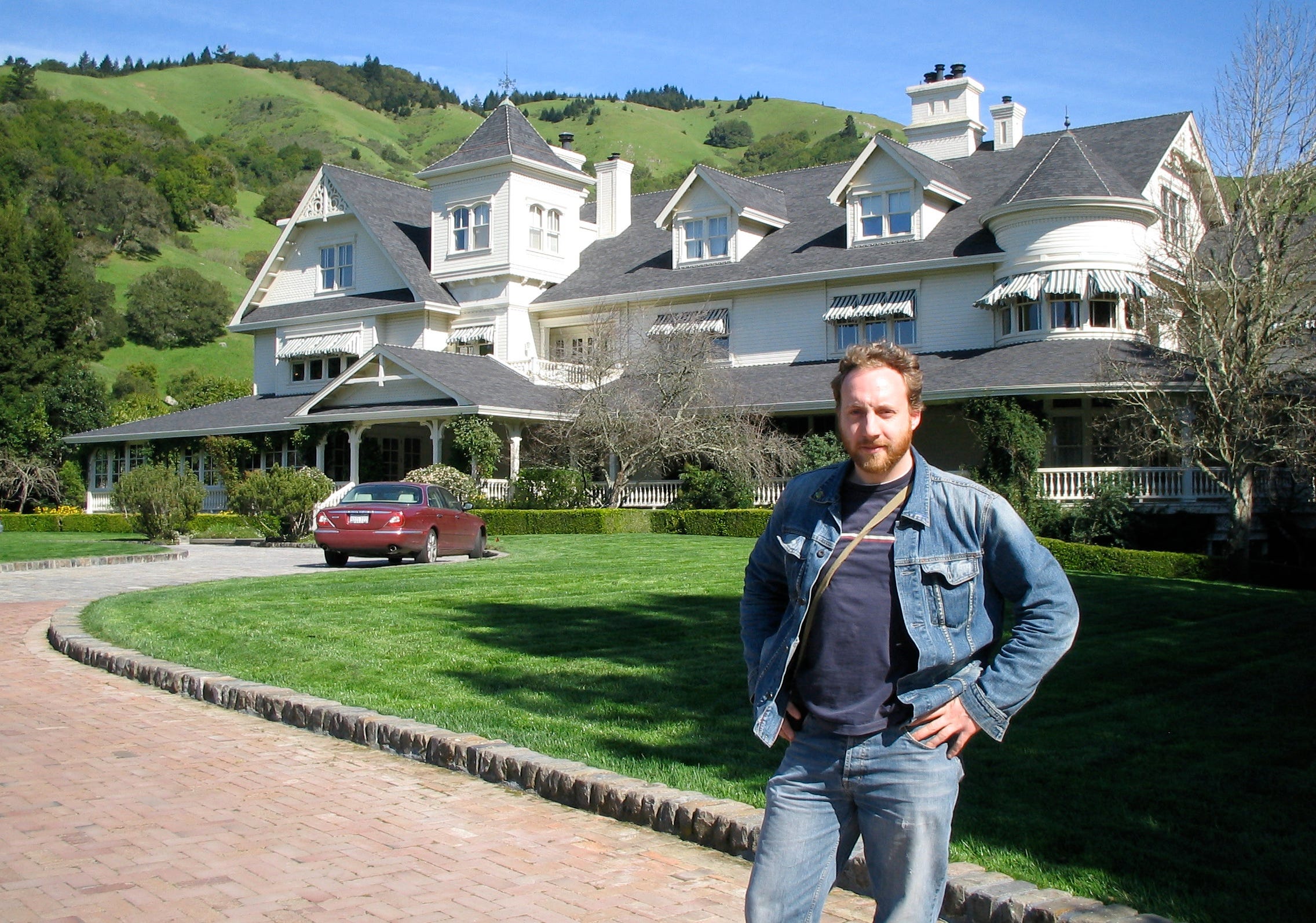
I still hold a lot of affectionate for that authentic era of Lucasfilm, of which Rick played such a huge part. Sadly it all came to an abrupt end in 2012, when Lucasfilm was sold to Disney.
Rick now lives in Prague - a place he loved to visit regularly during the filming of The Phantom Menace. Looking back, what I think I learned most from him was to believe in yourself and never give up. After all, he was a master of problem solving, which is why George loved him so much. Any obstacle thrown in Rick’s way, he’d always find a way around it and invariably for less cost.
Stephen Frears
Stephen Frears is not what most people would imagine a successful film director to look like. In fact, you could be forgiven for mistaking him for a vagrant, as he always looked a little dishevelled, shuffling around the school from block to block.
His hair was always scruffy, as if he’d just gotten out of bed and he would often wear a few days of stubble on his chin for good measure. He wore mostly plain baggy T-shirts that sat a little skew-whiff on his shoulders and in colder weather he’d wear a jacket over the top (that was invariably creased) and a scarf hung loose around his neck.
All in all, he was a wonderfully eccentric, laid-back individual, with a sharp observational mind and a wry sense of humour. He spoke in a somewhat mumbling/grumbling manner, not too dissimilar to The Fast Show character Rowley Birkin QC, except Stephen was “very, very drunk!” …on drama, NOT alcohol. Most of all though, he was incredibly easy to get on with, able to put anyone at ease.
When I started my course at the National Film & Television School in 2002, Stephen had just directed Dirty Pretty Things and before that High Fidelity. He had also recently had a triple-by-pass operation on his heart and was told by his surgeon to quit smoking. As a result he would hover around students who were smoking with a look of envy, eventually blagging a few drags off one of us, like a naughty school boy.
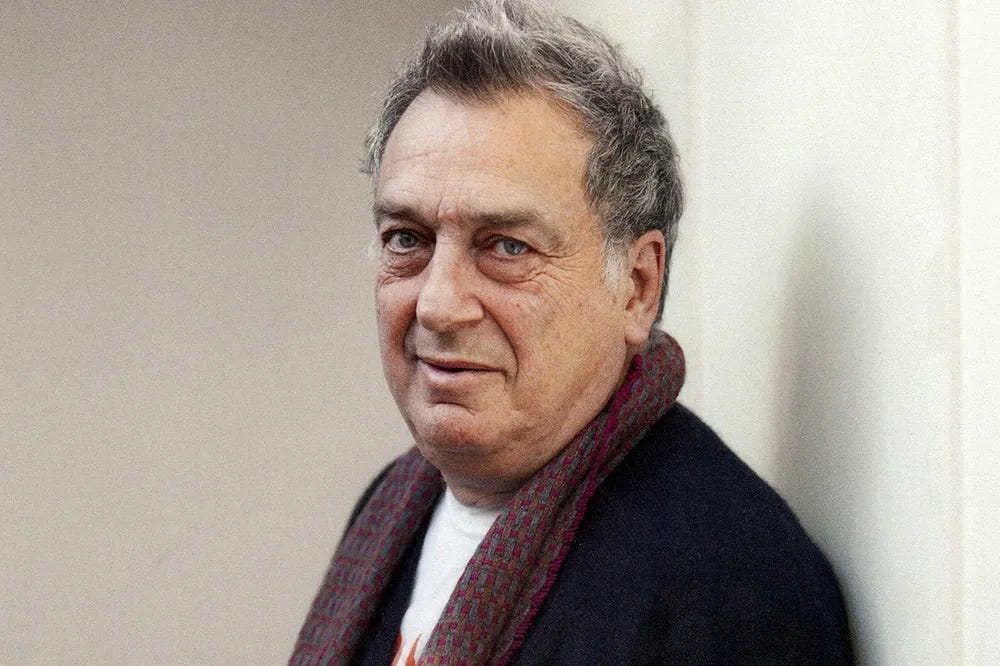
As a visiting ‘celebrity’ director, his job was essentially to mentor the six fiction direction MA students in each year. As all director’s are wildly different, he was likely to be of more help to some than others, but for me personally, he left a lasting impression. Over the two years, he offered me some valuable insights and advice that I still apply to my work to this day.
One of his favourite tricks, was when we had our one-to-one’s with him, before shooting. He’d ask each of us if we’d drawn up our storyboards and if you said yes, he’d enthusiastically ask to see them, only to then tear them up in front of your face, declaring that “You don’t need storyboards!”
Stephen despised the idea of planning anything in advance. He loved the thrill of being on set and thinking on your feet, getting a feel for the space and the scene during the rehearsals and only then deciding where he was going to place the actors and camera. He felt that planning storyboards in advance, encouraged inexperienced directors to be too rigid on set, he wanted us to take risks, to be daring, creative and bold.
He and Brian Tufano (who was the cinematography students ‘celebrity’ mentor), ran a fantastic workshop with us, showing how they intuitively decide how they are going to cover a scene, often with just one carefully planned dolly shot.
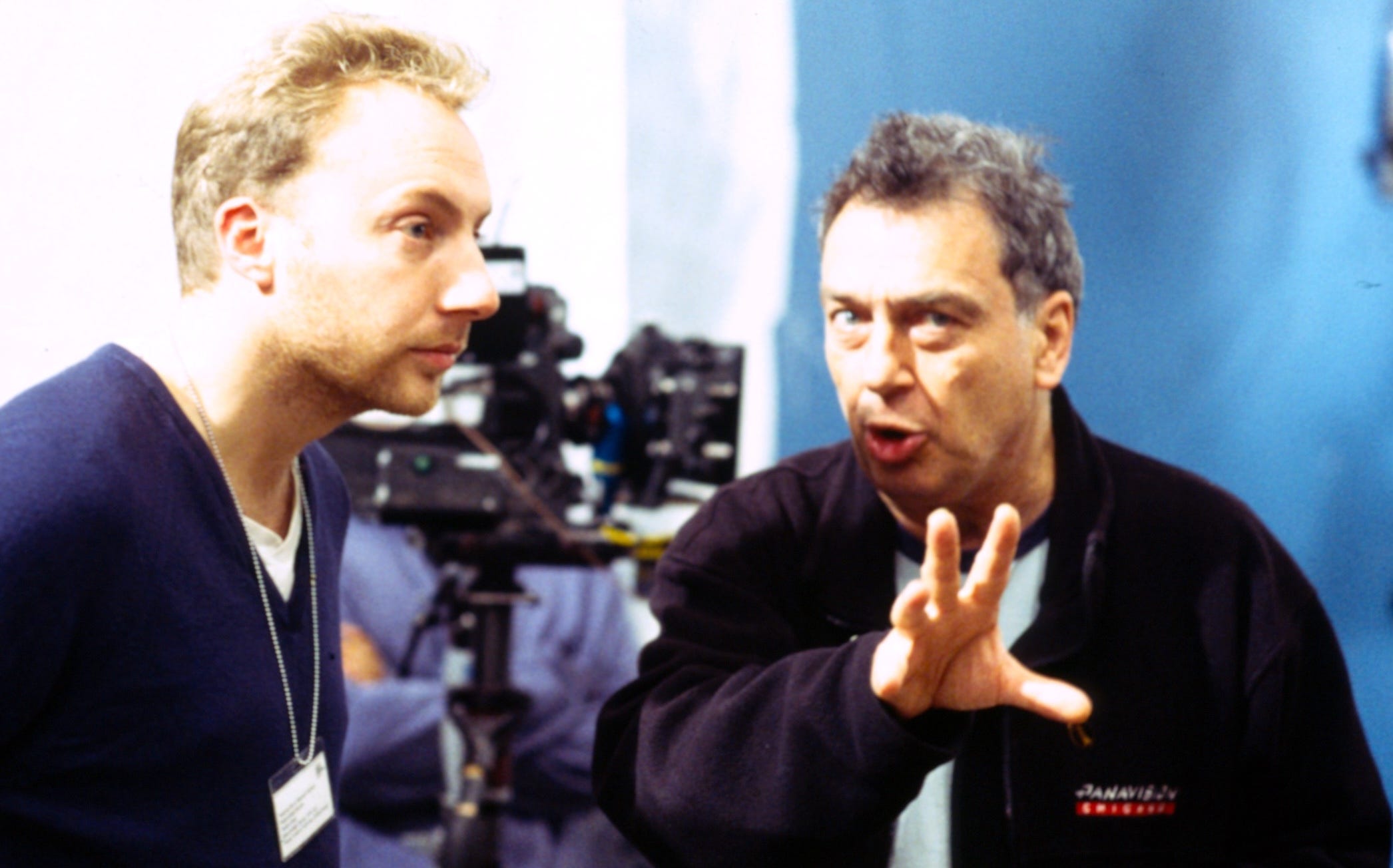
The very first lesson Stephen taught me (that I can remember), was during a test screening of our ‘poetry without words’ film exercise called No Fixed Abode. After my screening, he questioned me about what had happened to my main character (a homeless girl), asking why she didn’t wake up when the bin man dragged her away. I explained that the bin man had put something in her drink, only then realising my mistake. Although the clues were visible in the wide shot, the audience (Stephen) had missed it and so he said,
“Filmmaking is actually very crude. If there’s something important the audience needs to see, then you have to show it to them right up close. That way they don’t miss it and they know it’s important.”
It seemed so obvious once he said it and yet it had a profound effect on my directing. As far as I know, I’ve never made that mistake again.
For our next film exercise, the production design students had the opportunity to build a set for us. Mine happened to be a rather ambitious bombed out train station on the outskirts of Berlin during WWII called The Last Day. When Stephen came onto set with me, the day before the shoot, he said, “You’ve got to be careful you don’t end up with a stage play on film.” The set was very long and shallow, meaning you were limited by the level of degrees you could swivel the camera, without the risk of out running out of set. At the time, I’m not sure I knew how to navigate around this issue, but the next day he elaborated, explaining that “You have a very flat set, so you need to create the illusion of depth by filling the frame with foreground elements, especially if they can hide areas where you’ve run out of set.”
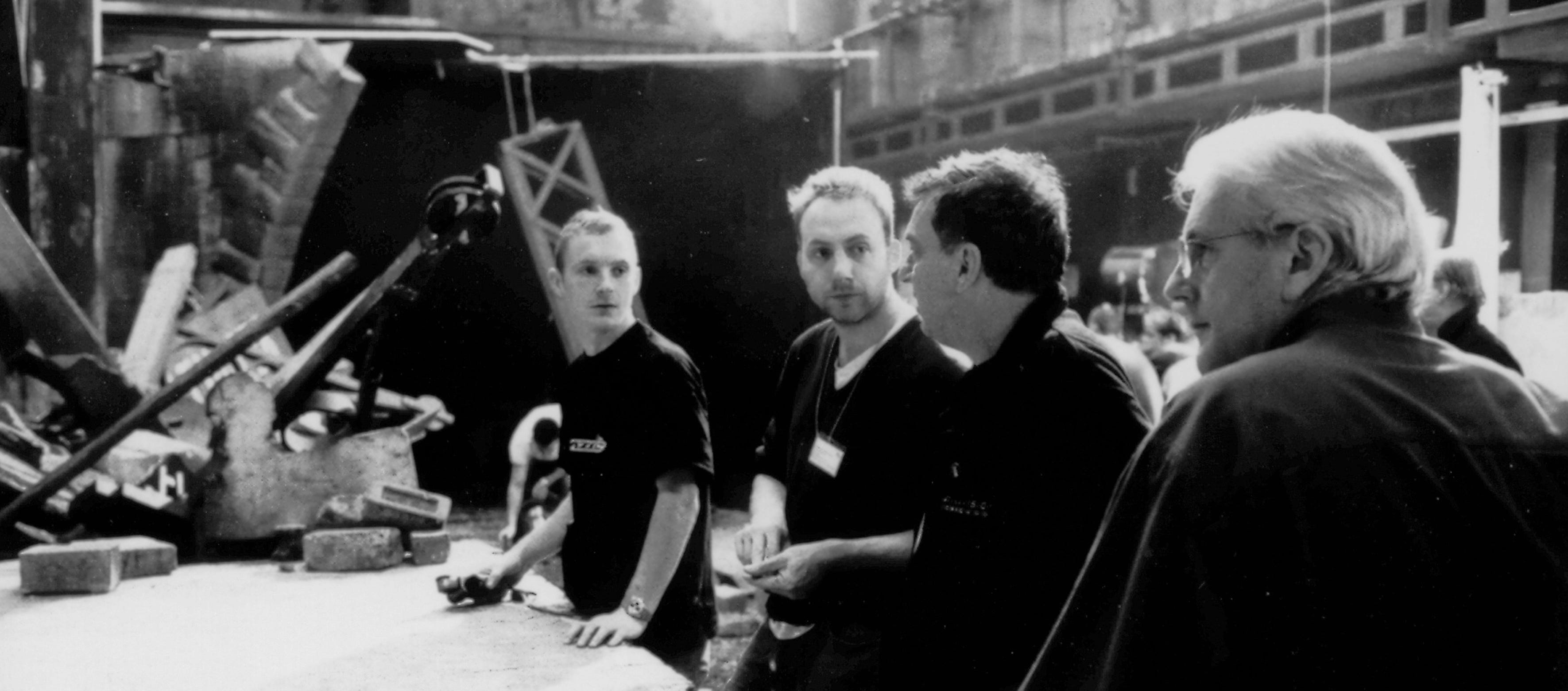
In my second and final year at film school, I think Stephen must have been busy prepping or shooting his next film as he didn’t show up until the summer when we were finishing our graduation films. I remember him sitting in on the edit of my final film The Happiness Thief. It was a dark Dickensian fantasy involving quite a bit of blue-screen and visual effects work that was still missing. After commenting with amusement that I was “ridiculously soppy,” he admitted “I don’t really make these kinds of films, so I don’t want to give you any advice, as I think you clearly know what you are doing better than I do.”
However, Stephen, myself and the editor Ben all agreed that there was a problem with the story. I had been forced to hand over the writing of the final draft to another scriptwriter, as the school felt I needed to concentrate on my role as director, now that we were so close to production. This additional screenwriter was intent on the idea that the children in the film were moving house because their parents were getting divorced, but although this had personal relevance to my own childhood, it was not the story I wanted to tell. For me, ‘divorce’ just didn’t sit right within the context of a fantasy world, nor was it coming across clearly enough in the edit, leaving more questions than answers for the audience.
Stephen could see the potential in my short and wanted it to be the best it could possibly be. As a result, he went out of his way to force a reluctant NFTS to fund and facilitate a re-shoot to solve this story issue. In the end it paid off spectacularly for myself, the crew and for the school’s reputation, as The Happiness Thief was then selected in competition at the Cannes Film Festival the following year - Something that would never have happened without his intervention.
My final memory of Stephen Frears is one of kindness disguised as humour. In the last few months of my time at the NFTS, deep in post-production of our graduation films, I had the mishap of being violently mugged in Soho, around 1 am on Wardour Street, by three Tottenham gang members, who stole my phone and wallet. I ended up wrestling with them in a back alley for what was probably less than 30 seconds, until I was eventually overpowered and repeatedly hit over the head and face with an empty Newcastle Brown bottle. Although it split my upper lip, forehead, and nose, leaving me with stitches, a black eye, and several golf ball size bruises on my head, jaw and forearms, thankfully the bottle didn’t shatter. If it had, I don’t want to imagine what might have happened.
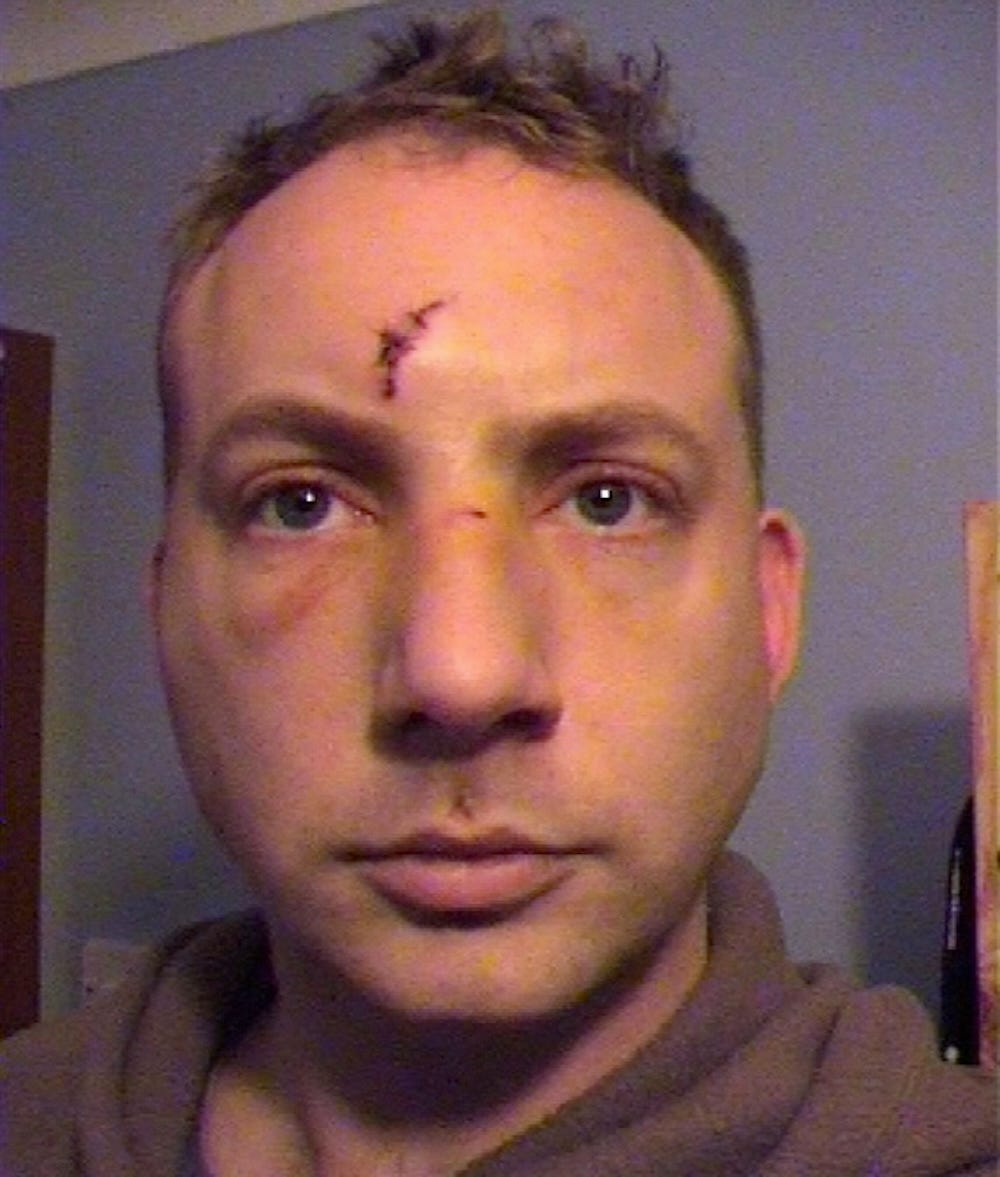
I spent most of the night in A&E suffering from shock, waiting for my step-dad to pick me up (without my phone, it was the only telephone number I knew off by heart), but had to go back to film school the next morning, as they were recording the music for my final year film, with a live twelve piece orchestra and I wasn’t going to miss that.
As I trudged through the school gates feeling sorry for myself and a little apprehensive, I made my way to the recording studio at the back of the main stage, passing the second year director’s port-a-cabin, where Stephen was killing time doing a jigsaw puzzle. He clocked me and opened the window with urgency to say
“Derek, I’m terribly sorry to hear what happened to you last night...”
I was impressed he already knew about it, that such gossip had spread all the way to the top so quickly. I was just about to thank him, when he continued.
“…I thought your film was rather good!”
It took me a moment to understand he was suggesting I had been beaten up for making a terrible film, after which I spontaneously laughed out loud. It felt really good to laugh after such an ordeal. He chuckled along with me, before asking me seriously if I was okay. Apart from the cuts and bruises I said I was. He then gave me a reassuring nod before returning to his jigsaw.
Although many other people also showed concern for me that day, he was the only one who made me laugh out loud and I really appreciated that, as it really, really helped.
Special Mentions
I also have to mention some other generous people who although were not ‘mentors’ in the strictest sense, their support and recognition of my artistic talent or creative passion didn’t go unnoticed.
First, are my two art teachers from secondary school.
Mr Cook taught me in my first and second year. All I can remember was that he was bald on top with short light brown hair on the sides and a medium sized moustache. One of my earliest memories, was of Mr Cook coming back into class and glancing down at the ‘Wanted Poster’ I was doing and saying “Christ kid, you drew that?” It was a poster for an actor - Michael J. Fox as Marty McFly from Back to the Future.
Mr Springett taught me in my third and fourth year and was shorter and rounder, with a full beard and thick light brown hair. He liked to wear slightly baggy corduroy trousers and a patterned jumper. He was always chirpy with full rosy cheeks and might well have lived on a farm - He certainly owned chickens. Both of them were always enthusiastic about the work I produced in school and the work I brought in from home, regularly stapling them to the walls in class.
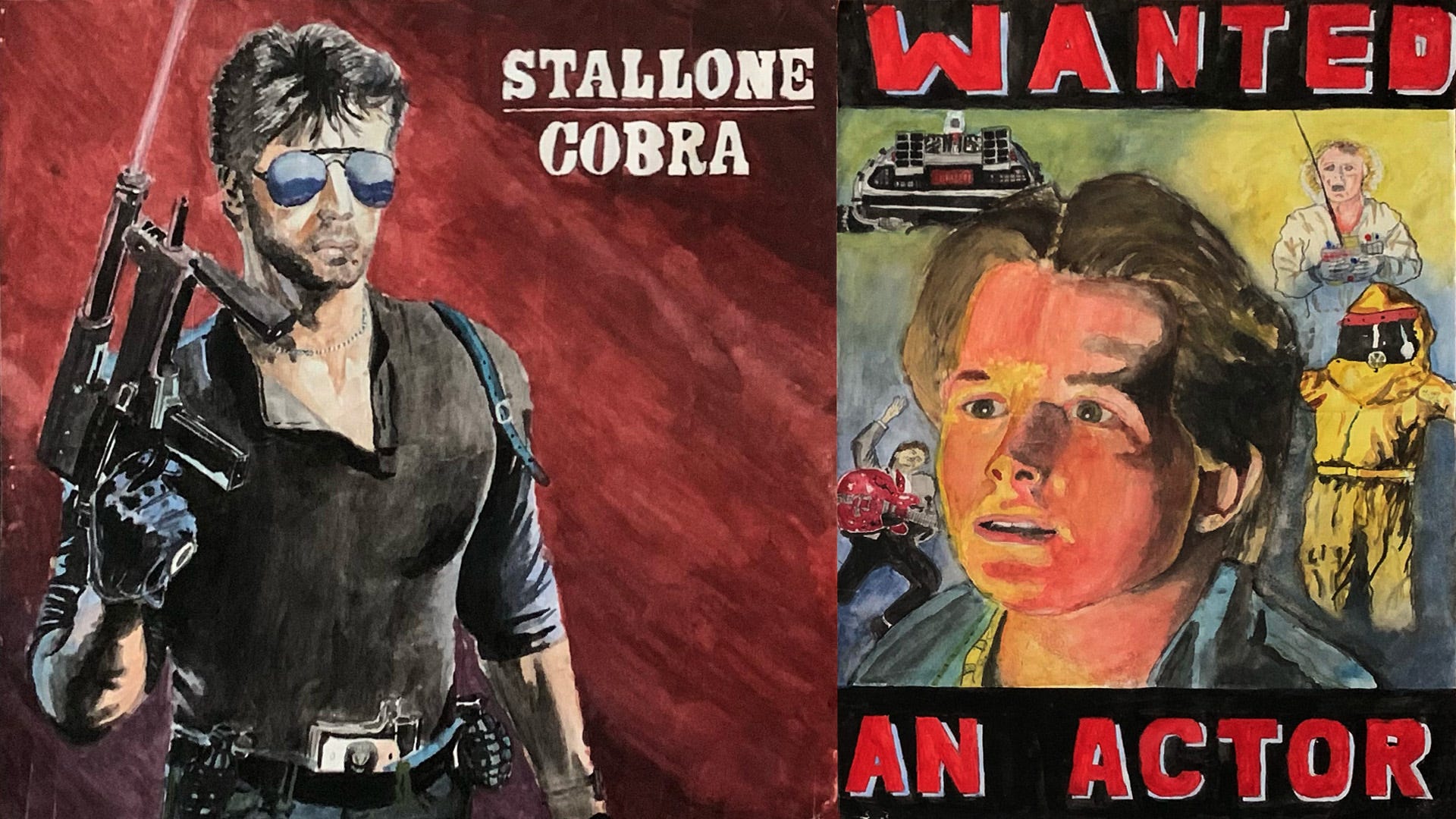
Both teachers awarded me an A for effort and 1 for attainment in my school reports. However, my fifth year teacher didn’t like me at all (and I didn’t like him, partly because he had halitosis and kept leaning down into my face). He had the audacity to give me a B/1, ruining my straight A/1 score for Art that I’d achieved all through primary and into secondary. I suspect I deserved it, having been far too spoilt by my other previous art teachers. I still got an A in my G.C.S.E. art though, so it didn’t affect my further education.
The next special mention is Nick May. He was my film production tutor in my second year at Northumbria University who risked losing his job in order to defend me, my crew and the film we wanted to make, against a third-wave feminist tutor who ironically accused my film script of being misogynistic. She was demanding it be cancelled and reported Nick to senior faculty. He was then forced to justify his decision to ‘green light’ the project. The film in question called Blackout, explored my fear of violence and excessive masculinity (of which was rife in Newcastle at the time) and was inspired by another feminist’s lecturer’s claim that ‘every man is a potential rapist.’ Nick could have easily succumb to her demands. He was a very gentle man by nature and I suspect she thought she could bully him, but amazingly he resisted, showed great courage and stood his ground. For that I have a huge amount of respect for him and will be forever grateful.
In my third year at Northumbria University we had a new course leader - Brian Hoey, who on viewing my pre-production work for my graduation film Talk To Me, simply said “Christ! where did you learn to do this?” He was genuinely shocked by the level of detail in my shot planning. I had devised a way to display storyboards, camera and shot details, and a marked up script, together in three columns of an A4 page. It was the first hint of recognition by a tutor (other than Mike Joslin) that what I was doing was above and beyond expectation. It gave me a well needed boost of confidence at a time I was feeling unsure about my abilities.
Next up is director Oliver Parker during the making of An Ideal Husband. I was a production runner on the film and was once asked to drive him into London from Leavesden where we were based. I can’t remember exact timelines, but I think it must have been in the week or two after we wrapped. Anyway, we soon got chatting in the car. I obviously told him that I wanted to direct and as An Ideal Husband was his first feature film (He had previously only directed theatre plays), he admitted to being quite ‘green’ and so we ended up having a lot to talk about, including Clive Barker which I write about in another Substack piece on his short story Dread. We talked for several hours as equals, just two passionate filmmakers sharing stories. It was great.
Over the next few years I bumped into Ollie a couple of times in central London and on both occasions he spotted me first, calling out to me by name. He was genuinely happy to see me and curious enough to ask what I’d been up to. Most feature film director’s would not recognise their runners years after a shoot, so I felt very flattered that he would want to stop and say hello.
My final special mention is the late Brian Tufano (cinematographer of Trainspotting and Billy Elliot) who was the ‘celebrity’ mentor to the cinematography students at the NFTS.
Just weeks before I was supposed to be directing The Happiness Thief, I began losing control of the project due to a conflict of interests over bureaucratic decisions within the school. As a result, my vision for the film was becoming compromised. I can’t remember how Brian found out that I was unhappy, but something clearly outraged him enough to want to intervene and help me.
He asked me to meet him for breakfast in the canteen, first thing the next morning. It was so early, there were barely any staff or students around. We found a table in the corner, where he asked me to tell him my vision for the film in detail. He then invited each of my student crew members from each discipline, to come and sit down with us one at a time, asking each one of them “what is stopping you from achieving Derek’s vision?”
We ended up putting our heads together to come up with alternative solutions, ways around restrictive school policy or how to deal with department resistance, until Brian had relieved me of all unnecessary frustration and worry, allowing me to finally look forward to the shoot. It was a very kind and generous thing for him to do, especially as he wasn’t even officially a directing student’s mentor.
Conclusion
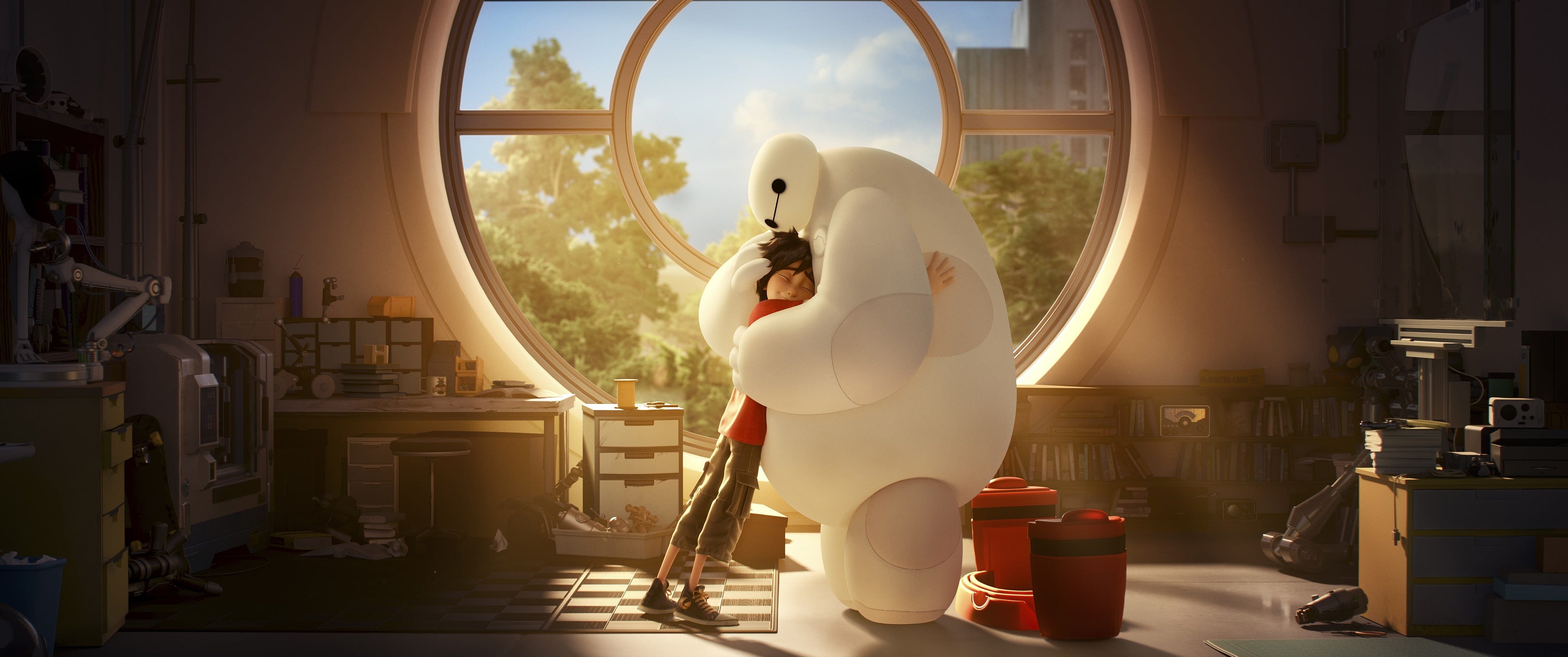
I would have loved to have gone all the way to the top of feature film directing and left a lasting legacy. The cynical side of me feels ashamed that I failed to live up to my own high expectations - fearing that my mentors would be disappointed in me for not reaching such heights. However, my optimistic side thinks it’s never too late, and if you consider Stephen Frears is 83 and still going strong, I potentially have another 30 years or more to make my mark in some way.
That said, ever since I graduated from the NFTS and completed my ‘official training’ as a fiction director, I’ve tried to share my passion, skills and knowledge with as many other people as possible, so at the very least, I’ve been able to pass on what I have learned.
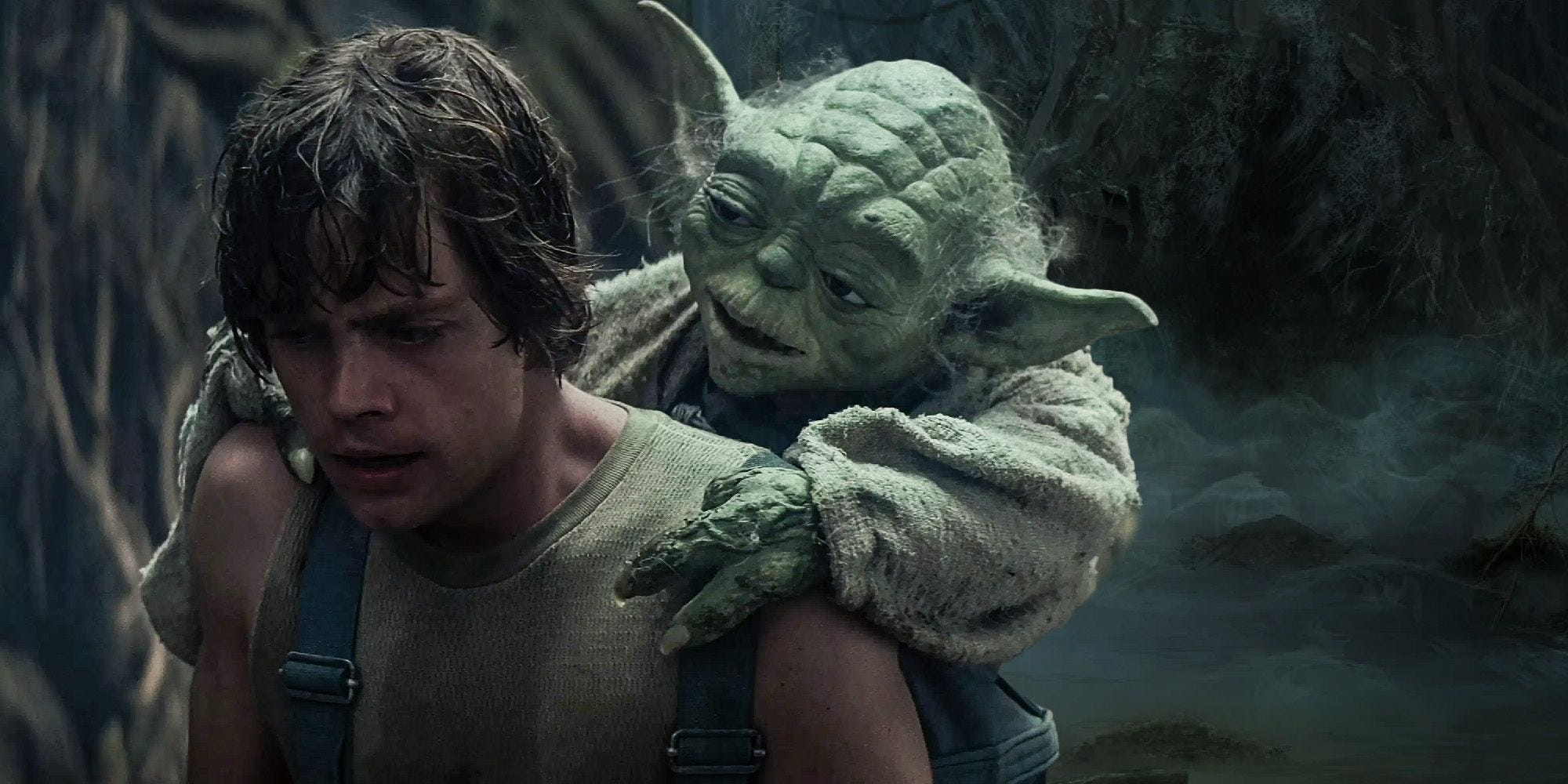
“When gone am I, the last of the Jedi will you be. Pass on what you have learned.”
Yoda’s final words to Luke Skywalker
Over the last twenty years I’ve ran all kinds of filmmaking workshops - for pupils at my old secondary school, for 7 to 15 year-olds on a Saturday morning filmmaking club, for university students, for the homeless, for unemployed young people, for pupils at underperforming schools and for kids with additional needs.
Although I’ve not had the chance to make films at a scale where I can offer ‘apprenticeships,’ I did get a lot of pleasure in 2017, giving four students on the UCA’s TV Production course at Maidstone Studios, a unique experience working alongside me to make my no-budget iPhone thriller short - Last Night.
I’ve also digitally remastered and preserved nearly all of my work to date, making it available for anyone to view via my Delfilm website, which includes an array of behind-the-scenes content, early work, spoofs and other creative projects and exercises that I hope others might find inspiring.
In addition I have a Delfilm Facebook page that I post new film equipment I’m excited about, news and developments about my latest projects or articles on storytelling and scriptwriting that I think might be useful to others.
More recently I’ve been offering my broader thoughts, insights and criticisms on various subjects via this Substack page.
The best any of us can do is to never stop doing what we love. I’ll keep writing, keep honing my filmmaking skills, keep reading, keep learning and keep helping others.
I feel very grateful to all of my mentors for the help and support throughout the years, steering me through what has turned out to be a wonderful journey, a journey that I hope still has more to come.
Lovely read Derek, and my goodness you have a great memory. I recall there's a 'delfilm' etched in the pavement somewhere in Allington. I love how you have always followed your passion. When we are doing what we love, we are always in the right place.